

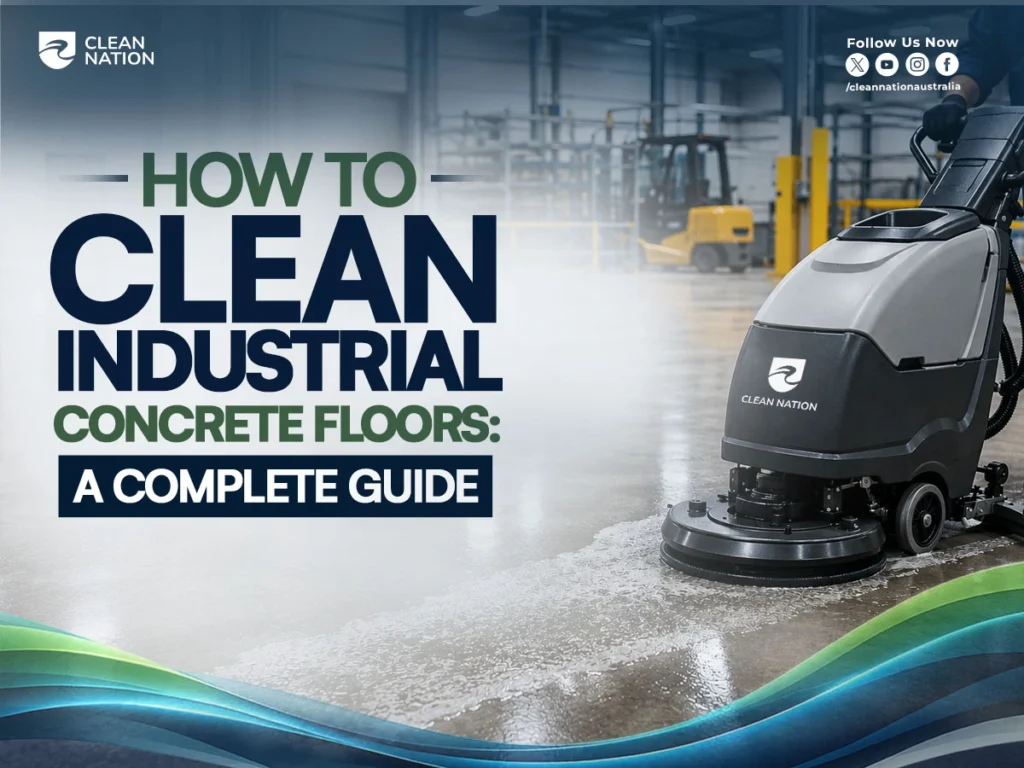
If you want to know how to clean industrial concrete floors, start by identifying your floor type, since sealed, polished, unsealed, and epoxy-coated concrete need slightly different care. Remove dust and debris, apply a suitable cleaning solution, scrub, rinse thoroughly, and let the floor dry completely.
Treat stains like oil, rust, or chemical spills right away, and stick to a regular cleaning routine to keep the floor safe and durable. Avoid harsh acidic cleaners, excess water, and abrasive tools, since these damage the surface over time. For heavy-duty facilities or floors needing more than routine care, a professional service like Clean Nation can handle deep cleaning, stain removal, and resealing.
Why Regular Industrial Concrete Floor Cleaning Matters?
A dirty concrete floor doesn’t just look bad. It creates real problems.
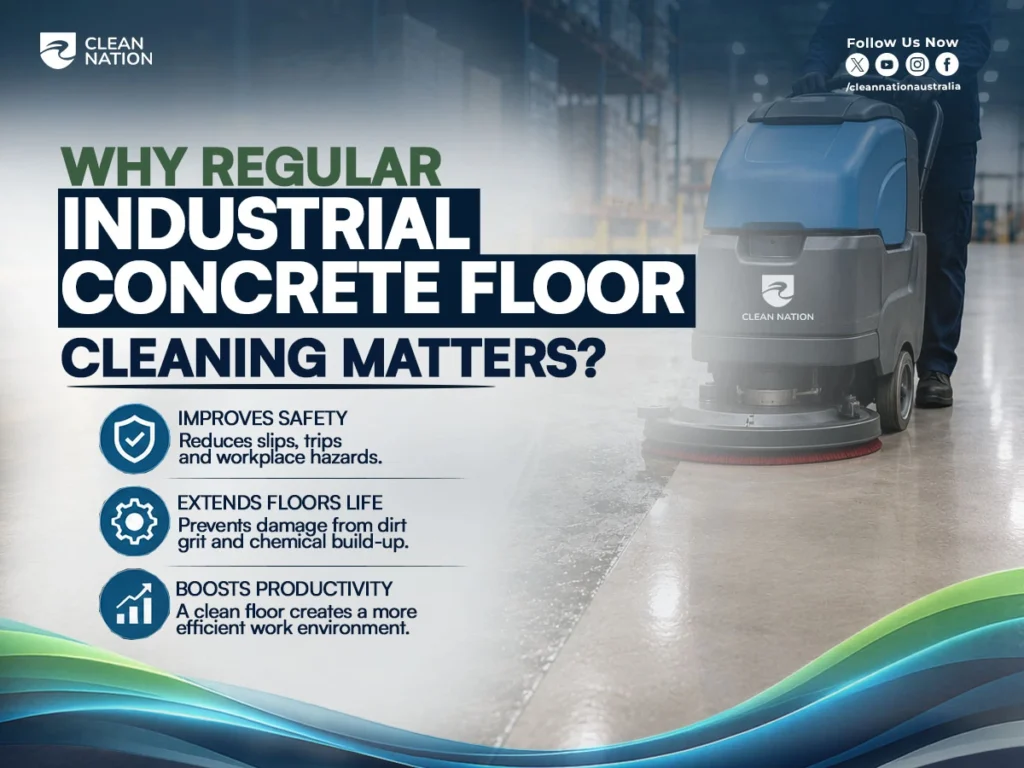
Workplace safety comes first. Oil, dust, and spills lead to slip hazards, especially in busy areas where people and equipment move all day. Regular cleaning keeps those risks off the floor. As more Australian businesses prioritise workplace safety and facility maintenance, the commercial cleaning sector continues to expand. Learn more about How Much Is the Cleaning Industry Worth in Australia? to understand the industry’s growth and market trends.
It also protects floor durability and floor lifespan. Grit and chemical residue wear down the surface over time. Clean it regularly, and the floor simply lasts longer.
Then there’s floor hygiene. Damp, dirty concrete invites bacterial growth and odours, which also hurts indoor air quality as dust and particles get stirred into the air.
Finally, a clean floor supports operational efficiency. Equipment moves smoothly, spills get caught early, and the whole space feels like a healthy environment to work in. At Clean Nation, that’s the standard we clean to, every time.
Understand Your Industrial Concrete Floor Before Cleaning
Not all concrete floors are the same, so knowing your concrete floor types matters before you start cleaning. Whether your floor is sealed concrete, polished concrete, unsealed concrete, or coated concrete changes what products and tools are safe to use. A concrete sealer or protective coating can make a surface easier to clean, while a porous surface needs a gentler approach. Check your concrete surface first, then clean accordingly.
Sealed Concrete Floors
Sealed concrete floors have a concrete sealer, like an acrylic sealer or polyurethane sealer, applied for protective coating and moisture resistance. Harsh cleaners weaken sealer integrity and shorten sealer lifespan. When you clean sealed concrete floors, stick to mild products that protect the seal.
Polished Concrete Floors
Polished concrete floors get their glossy finish through mechanical polishing, sometimes with a diamond-ground finish. That reflective finish and polished shine show dirt fast, so clean polished concrete floors gently to avoid dulling the surface. Regular polished concrete maintenance keeps the polished finish looking sharp.
Unsealed Concrete Floors
Unsealed concrete floors are raw concrete, or bare concrete, with no protective layer. This porous concrete has high porosity, so liquid absorption happens fast and embedded contaminants set in quickly. Unsealed concrete cleaning needs quick action on spills to prevent moisture damage.
Epoxy-Coated Concrete Floors
Epoxy-coated concrete floors use an epoxy coating or epoxy sealer to create a tough protective layer. This gives coated concrete floors strong chemical resistance and scratch resistance, making for durable flooring. Epoxy floor cleaning still needs care, since the wrong tools can damage the coating over time.
Tools and Equipment Needed to Clean Industrial Concrete Floors
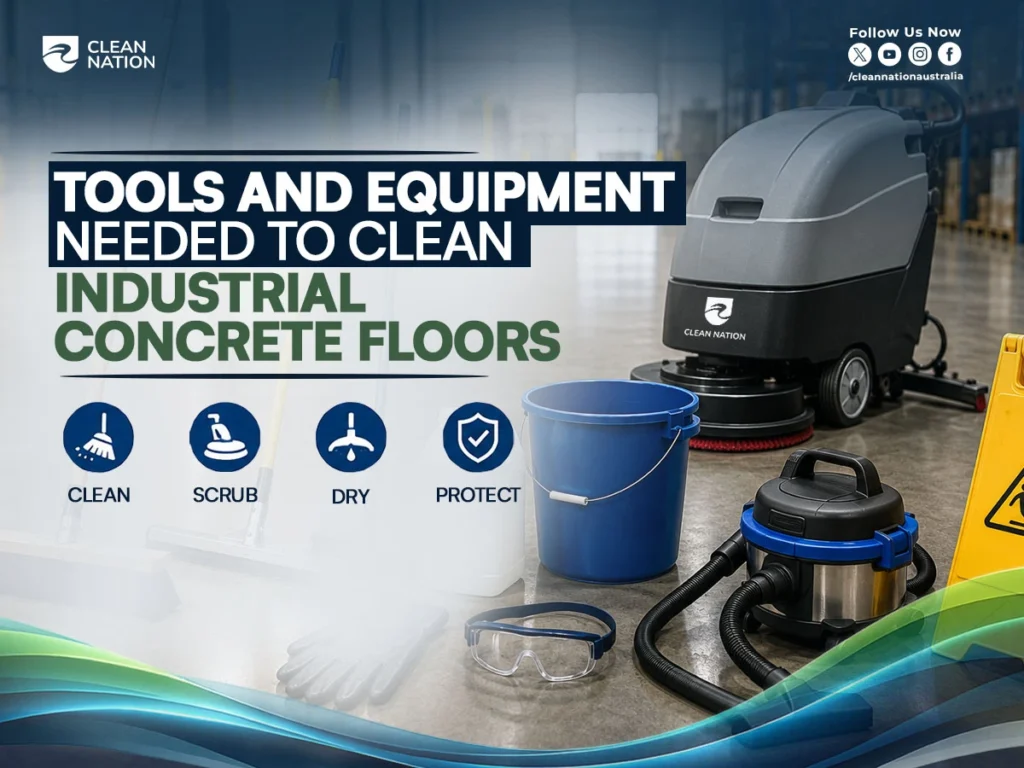
The right gear makes cleaning faster and safer. Depending on the job, you might need an industrial floor scrubber, industrial vacuum, or pressure washer. For daily use, an automatic floor scrubber and wet/dry shop vacuum cover most tasks. Larger facilities often rely on multiple floor scrubbers or steam cleaners. Always wear protective gear, and match your cleaning solutions to your floor type.
Essential Cleaning Equipment
Start with a stiff-bristle broom to clear debris, then a wet/dry shop vacuum for anything left behind. An automatic floor scrubber or industrial floor scrubber handles larger areas fast. A mop and bucket still work well for tight spaces. For bigger facilities, a ride-on scrubber or walk-behind scrubber saves time, and a floor buffer keeps polished surfaces looking sharp. Finish up with a squeegee to clear water toward drains.
Recommended Cleaning Solutions
Stick with a pH-neutral cleaner or mild detergent made for concrete. A concrete-safe detergent or alkaline degreaser cuts through oil without harming sealers. If your facility cares about sustainability, look for eco-friendly cleaning solutions like a biodegradable cleaner or VOC-safe cleaner. Non-abrasive cleaning tools paired with a neutral pH cleaner protect the surface while still getting it clean.
Tools and Chemicals to Avoid
Skip harsh cleaners, acidic cleaners, and anything with muriatic acid. Never mix bleach and ammonia, since the fumes are dangerous. Avoid abrasive tools like a steel wire brush too, along with corrosive cleaners and abrasive particles that scratch the surface and wear it down faster.
How to Clean Industrial Concrete Floors Step by Step?
Good cleaning procedures follow a set order: dust removal, dry soil removal, floor scrubbing, rinsing, and drying. Whether it’s a routine clean or deep cleaning, these proper cleaning methods keep the process simple and consistent. Here’s how to rinse concrete floors and dry concrete floors the right way, step by step.
Step 1: Remove Loose Dust and Debris
Clear loose debris and fine dust first, using dust mopping or a static dust mop. A push broom works too for larger areas. This dry debris removal step supports dust control and dust suppression, so you’re not just pushing grit around once water comes into play. Good dust reduction here makes every step after it easier.
Step 2: Apply the Right Cleaning Solution
Apply an alkaline degreaser or mild detergent, ideally a neutral pH cleaner, based on your floor type. Do a quick spot-testing check first. Gentle cleaning solutions work best for degreasing without damaging the surface. Keep an eye on solution flow and use controlled water use so you’re not soaking the floor unnecessarily.
Step 3: Scrub the Floor Using the Appropriate Equipment
Use a floor scrubber or automatic floor scrubber for mechanical scrubbing across the surface. A soft-bristled brush works for smaller spots. Deep scrubbing with gentle agitation lifts dirt without harming the floor, especially when you use non-abrasive pads or scrubbing pads. An orbital floor scrubber is a good option for tighter or detailed areas.
Step 4: Rinse the Surface Thoroughly
Rinse with clean water using a wet vacuum, garden hose, or mop. Proper rinsing and floor rinsing clear away leftover solution, and a squeegee helps push water toward drains. Good water management here leaves you with a streak-free finish instead of sticky residue.
Step 5: Allow the Floor to Dry Completely
Speed things up with air movers, industrial fans, or better ventilation. Strong air circulation supports faster evaporation and complete drying, which matters most in high-traffic zones. If drying large areas regularly is a challenge, floor drying services can help keep things moving without slowing down operations.
How to Remove Common Stains from Industrial Concrete Floors?
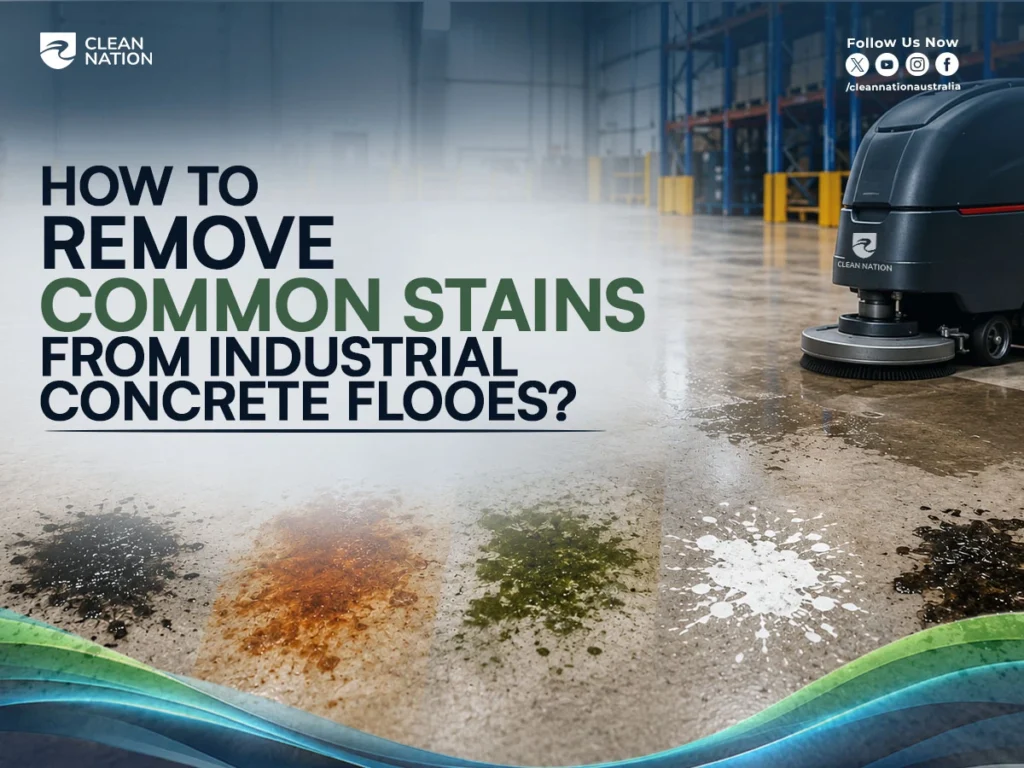
Even with regular cleaning, stubborn stains and deep-set stains still show up. Concrete stain removal depends on the type of stain and how long embedded contaminants have had to set in. A poultice treatment often helps with older marks, and good stain prevention beats stain removal every time. The right approach also protects stain resistance, so future spills lift off easier.
Oil and Grease
Oil stains and grease stains are the most common culprits, often from automotive fluids. Apply an alkaline degreaser, let it sit, then work through oil stain removal or grease stain removal with a scrub and rinse. For embedded oils, a bit of extra degreasing time helps pull the residue out.
Forklift Tyre Marks
Tyre marks build up fast wherever forklift wheels or forklift bearings cross the same path. Constant equipment movement, vehicle traffic, and heavy equipment cause surface discolouration over time. Light mechanical scraping usually clears these marks, especially in zones with heavy foot traffic.
Rust Stains
Rust stains respond well to a concrete-safe rust remover, ideally one based on oxalic acid rather than harsh hydrochloric acid. A poultice treatment helps too. Scrub gently with a medium-bristled brush for effective rust stain removal from concrete.
Chemical Spills
Chemical spills need fast spill cleanup to avoid chemical residue soaking into the floor. Good spill management and chemical residue removal reduce chemical exposure and prevent chemical buildup. Always follow chemical safety steps before treating surface contaminants.
Paint and Adhesive Residue
For paint removal from concrete or adhesive removal from concrete, start with a plastic scraper or putty knife to lift paint drips and adhesive spills. A solvent-based remover handles whatever stubborn residue is left, and light mechanical scraping finishes the job.
Best Cleaning Methods for Different Industrial Facilities
Cleaning needs shift depending on the space. Industrial environments, heavy-use areas, and high-traffic environments all wear differently, so manufacturing facilities, a distribution centre, or a construction site each need their own approach. Good facility management usually means using specialised cleaning solutions built around how that specific industrial facility actually operates.
Warehouse Floors
Warehouse floors take constant pressure from equipment movement across loading docks and warehouse aisles. Warehouse cleaning and warehouse floor cleaning should happen on a set schedule to keep high-traffic warehouse floors from wearing down too fast. Regular warehouse concrete floor cleaning is really just part of good warehouse maintenance.
Factory and Manufacturing Floors
Factory cleaning and factory floor cleaning usually deal with heavier soil than most spaces, especially in industrial zones running heavy equipment all day. Manufacturing floors need frequent industrial concrete floor cleaning, and manufacturing facility cleaning should be built into routine industrial maintenance rather than treated as an afterthought.
Distribution Centres
A distribution centre often has mixed soil levels across different transition areas, from the loading dock to storage zones. Distribution centre cleaning works best with a combination sweeper-scrubber, since one-pass cleaning across high-traffic floors saves time without cutting corners. This keeps operational efficiency high without slowing down daily activity.
Workshops and Garages
Workshops and garages tend to collect oil and grit fast. Workshop cleaning and workshop floor cleaning, along with garage floor cleaning, keep storage areas and garage concrete floors from becoming a hazard. For bigger jobs, garage floor cleaning services or concrete garage floor cleaning handle what a quick sweep can’t.
Industrial Concrete Floor Maintenance Tips
A solid floor maintenance routine beats reacting to problems after they happen. Regular routine maintenance, or better yet preventative maintenance, keeps small issues from turning into big ones. Set a clear maintenance schedule for concrete floor maintenance and industrial floor maintenance, and stick to it. Proactive maintenance and consistent maintenance now mean far less long-term maintenance work later.
Daily Cleaning Tasks
Daily cleaning starts with daily sweeping and dust mopping to catch tracked-in dirt before it spreads. Handle daily spills right away with quick spot cleaning, since daily wear adds up fast in busy areas. A bit of daily floor care, or basic daily concrete floor cleaning, keeps the surface in good shape without much effort.
Weekly Maintenance
Weekly mopping or a proper weekly cleaning session handles what daily sweeping misses. Use a damp mop and a bucket to clear dust buildup and surface dust. This is also a good time for grime removal and a quick floor inspection. Staying on top of weekly concrete floor cleaning stops small issues from building up.
Monthly Deep Cleaning
Monthly deep cleaning, or seasonal deep cleaning depending on your facility, tackles embedded dirt that regular cleaning leaves behind. Mechanical scrubbing works well here, along with floor polishing or floor buffing if your floor needs it. Some facilities prefer quarterly deep cleaning instead, but either way, deep cleaning services or deep concrete cleaning services can handle the heavier work.
Common Mistakes to Avoid When Cleaning Industrial Concrete Floors
A few concrete floor cleaning mistakes can cause more harm than the dirt itself. Whether it’s DIY concrete cleaning or a routine job, using the wrong cleaning equipment or the wrong products often leads to lasting problems.
- Using harsh or acidic cleaners: Acid-based cleaners, acidic cleaners, and muriatic acid cause surface etching and surface degradation. These harsh chemicals and corrosive cleaners eat away at protective coatings, leading to sealer damage over time. Hydrochloric acid in particular should be avoided on concrete altogether.
- Leaving spills for too long: The longer a spill sits, the deeper it goes. Stain penetration and contaminant absorption lead to deep-set stains, embedded contaminants, and permanent discolouration. Quick spill cleanup prevents stubborn stains and chemical buildup from settling into the surface porosity.
- Using too much water: Standing water causes moisture damage and trapped moisture inside the concrete. Poor water management leads to water absorption, mould growth, and bacterial growth. Better moisture control, along with a moisture-resistant sealer, helps avoid this altogether.
- Skipping routine maintenance: Without preventative maintenance or a clear maintenance schedule, floors face faster surface wear and even structural damage. This shortens floor lifespan and leads to long-term damage. Sticking to routine maintenance instead of reactive maintenance supports real repair cost reduction.
- Using the wrong cleaning equipment: Abrasive tools like steel wool or a wire brush leave surface scratches and a scratched surface behind. Abrasive particles speed up surface deterioration. Choosing non-abrasive pads and proper equipment selection protects the floor instead of wearing it down.
When Should You Hire Clean Nation for Industrial Floor Cleaning Services?
Not every job can be handled in-house, and that’s where professional industrial cleaning comes in. If you’re weighing up your options, our guide on How to Choose an Industrial Cleaning Service? walks through what to look for before you commit. Clean Nation offers industrial concrete floor cleaning services built around real facility needs, backed by expert advice and professional-grade care.
- Signs your floor needs professional cleaning: Stubborn stains that won’t lift, a dull or cloudy appearance, an uneven finish, and slippery surfaces are all signs your floor condition needs attention. Weakening sealer integrity, inconsistent cleaning frequency, or falling short on safety compliance are also good reasons to call in professional floor care.
- Benefits of hiring Clean Nation: With commercial-grade equipment and reliable cleaning solutions, Clean Nation delivers long-term floor protection and real cost reduction. Customised cleaning solutions and industrial cleaning solutions mean less guesswork, more efficient floor care, and better maintenance efficiency. The result is professional restoration that supports asset longevity and genuine labour savings for your team, all through professional concrete floor cleaning tailored to your facility.
- Clean Nation is one of the trusted names offering industrial cleaning services in Australia, with teams equipped to handle everything from routine scrubs to full floor restorations. If you’re specifically searching for an industrial cleaning service in Sydney, our local crews are familiar with the demands of the city’s warehouses, distribution centres, and manufacturing sites. We also provide industrial cleaning services in New South Wales more broadly, covering facilities outside the metro area that still need reliable, professional industrial cleaning on a regular schedule.
Client Experience with Clean Nation
A mid-sized distribution centre in New South Wales came to Clean Nation with a familiar problem: forklift tyre marks and oil stains had built up across the warehouse floor over several years, and daily in-house sweeping wasn’t cutting it anymore. The floor’s dull appearance was affecting both safety and the impression left on visiting clients.
Clean Nation carried out a full assessment of the floor condition, then put together a customised cleaning solution combining mechanical scrubbing, targeted stain removal, and a resealing treatment to restore protection. The work was scheduled around the site’s operating hours, so warehouse activity and industrial operations continued without disruption.
The result was a floor with a noticeably improved professional appearance, better slip resistance, and stronger long-term floor protection. The facility has since moved to a regular maintenance plan with Clean Nation, cutting down on the deep cleaning needed and keeping the floor in consistent condition year-round.
This is the kind of outcome facilities can expect: reliable scheduling, equipment that gets real results, and professional floor maintenance that fits around how the business actually runs. It’s the same standard of care we bring to every job across our industrial cleaning services in New South Wales. Ask for a customised quote and expert advice to see what Clean Nation can do for your facility.
FAQs:
The following are the FAQs:
Can pressure washing damage an industrial concrete floor?
Yes, if the pressure is too high or used too close to the surface, especially on sealed or epoxy-coated floors. Use a moderate pressure setting and keep the nozzle at a safe distance to avoid stripping the coating.
How long does it take for a concrete floor to dry after cleaning?
Most floors dry within 30 minutes to a few hours, depending on ventilation and airflow. Using industrial fans or air movers speeds this up, which matters most in areas with heavy foot traffic.
Is it safe to use a steam cleaner on epoxy-coated concrete floors?
Yes, steam cleaners are generally safe on epoxy coatings since they don’t rely on harsh chemicals. Just avoid prolonged high heat in one spot, as it can soften the coating over time.
What’s the best time to clean a high-traffic warehouse floor?
Cleaning outside peak operating hours, such as early morning or after shifts end, reduces slip risks and lets the floor dry fully before equipment and foot traffic return.
How much does professional industrial concrete floor cleaning cost?
Professional industrial concrete floor cleaning typically costs $3 to $8 per square metre, with full jobs ranging from $800 to $3,000+ depending on floor size and condition. Commercial projects start at $500 and can exceed $4,000 per square metre.
Conclusion
Keeping an industrial concrete floor clean takes consistency, not perfection. Sweep daily, deep clean regularly, treat stains as they happen, and know when a floor needs more than a routine scrub.
When you’d rather leave it to the experts, Clean Nation is ready to help. As one of the leading providers of professional industrial cleaning, we serve facilities right across Australia, including businesses looking for an industrial cleaning service in Sydney. Get in touch today for a customised quote and give your floor the professional care it deserves.