

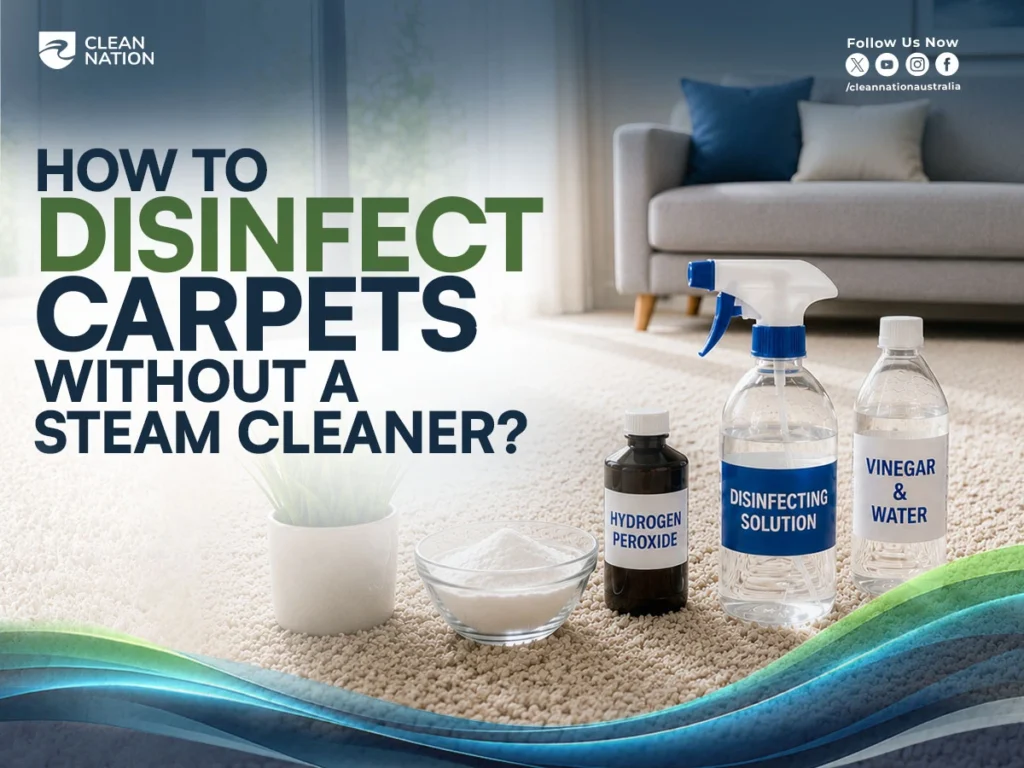
Wondering how to disinfect carpets without a steam cleaner? It’s simpler than it sounds. Start by vacuuming to lift out the loose dirt, then treat any stains before you move on. Spray on a registered disinfectant or a textile-safe sanitiser, scrub it in gently, and let it sit for at least five minutes so it has time to work.
After that, blot it up, rinse if needed, let it dry fully, and give it one last vacuum. If you’d rather go natural, diluted hydrogen peroxide works too; just remember vinegar and baking soda are better for general cleaning than real disinfecting. For most everyday messes, that’s really all it takes. Just follow the steps in order and don’t rush the drying.
What You’ll Need to Disinfect Your Carpet?
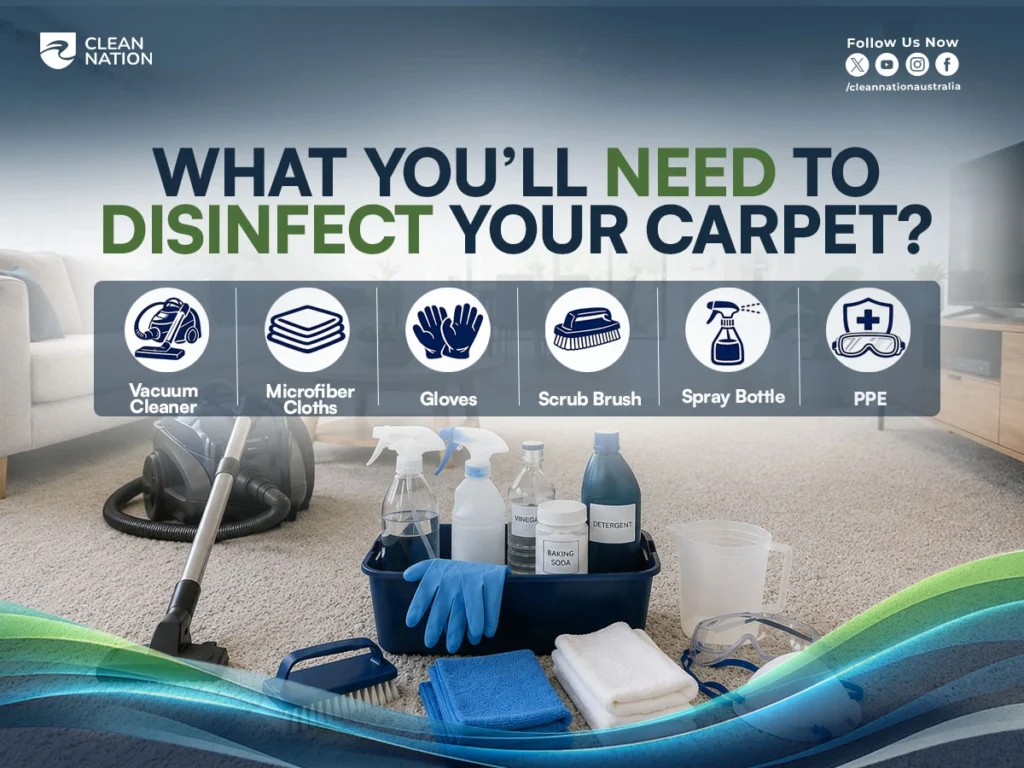
You don’t need fancy equipment for this. Most of these items are probably already in your cupboard.
Here’s your list:
- A scrub brush: for working the solution into the carpet fibres.
- A bucket: to mix your cleaning solution.
- An old rag: for blotting up moisture and spills.
- Liquid detergent helps lift dirt before you disinfect.
- White vinegar: a natural option that helps break down grime and odours.
- Baking soda: great for absorbing smells and lifting stains.
- Spray bottles make it easy to apply your solution evenly.
- Nitrile gloves: keep your hands protected while you work.
- PPE: if you’re using stronger products, a mask and eye protection are worth having on hand too
At Clean Nation, we always tell people the same thing. Gather everything first. Running around mid-clean looking for a rag or gloves just slows you down and makes the job feel bigger than it is.
Once you’ve got your gear sorted, you’re ready to get started.
Homemade Carpet Disinfecting Solutions
Don’t have a store-bought disinfectant? Here are a few DIY options that actually help.
Vinegar and water: Mix equal parts white vinegar and water, spray it on, let it sit, then blot. Good for cleaning and smells, but keep in mind vinegar is not a disinfectant. It won’t kill germs.
Baking soda: Sprinkle it on, wait 15 minutes, then vacuum. Best for odours and light stains.
Liquid detergent: A little detergent mixed with warm water lifts dirt. Go easy on the amount so you don’t leave residue.
Diluted hydrogen peroxide: This one actually disinfects. Mix it with water at a low ratio, and test a hidden spot first since it can lighten some carpets.
At Clean Nation, we’re honest about this: these homemade fixes are great for regular cleaning, but if you need real disinfection, go with a proper registered product.
How to Disinfect Carpets Without a Steam Cleaner? (Step-by-Step)
Here’s the easy way to do it, no steam needed. Just follow these steps.
Step 1: Vacuum the carpet
Vacuum well first to pull up loose dirt. A HEPA vacuum works best. Go slow and use the crevice tool along the edges; that’s where dirt hides most. Do a few passes over busy areas.
Step 2: Pre-treat stains
Deal with stains before you clean the whole carpet. For pet urine, use an enzyme spotter. For grease or oil, use a solvent spotter. Let it sit a few minutes before moving on.
Step 3: Apply a disinfecting solution
Mix your disinfectant; check the label for the right ratio. Pour it into a spray bottle and spray it evenly over the carpet. Keep it light; you don’t want the carpet soaked.
Step 4: Gently scrub the carpet
Use a soft brush and scrub in small circles. This gets the solution down into the fibres. Go easy, no need to press hard. Don’t over-wet the carpet or it may not dry properly.
Step 5: Allow proper dwell time
This step matters most. Let the solution sit for at least five minutes. This gives it time to work on the dirt and germs. Skip this, and you’re just wetting the carpet, not disinfecting it.
Step 6: Blot, rinse, and dry
Blot up the liquid with a damp rag. Don’t rub, just blot. Rinse lightly with cold water if needed. Open a window or turn on a fan to help it dry faster. Wondering how long does it take carpet to dry after cleaning? Wait until it’s fully dry before walking on it.
Step 7: Vacuum again
Once dry, vacuum one more time. This picks up any leftover soap or residue. Go over it in a few directions for the best result.
That’s it. At Clean Nation, we use this method often when steam cleaning isn’t an option, and it works well every time.
Common Carpet Problems and How to Disinfect Them
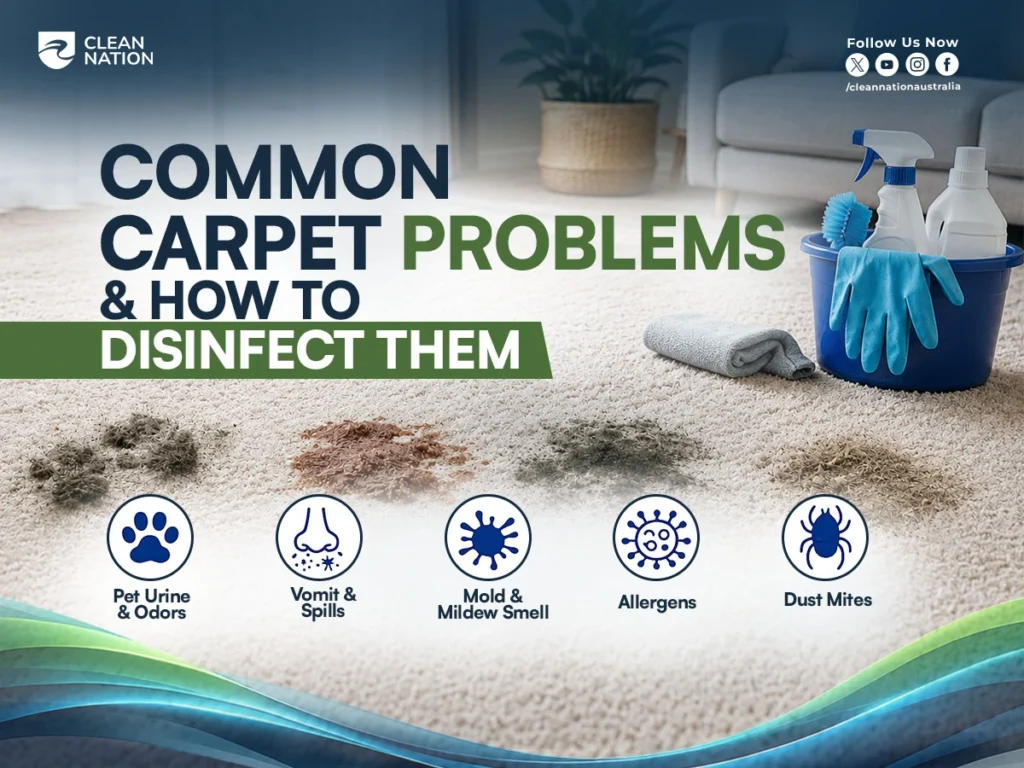
Carpets deal with a few repeat offenders. Pet urine and vomit are bio-spills that leave behind organic stains, and regular detergent usually can’t break these down fully. A mold and mildew smell means moisture got trapped somewhere, often in the padding underneath. Then there are allergens and dust mites, which settle deep into the fibres, especially in homes with pets.
For pet urine and vomit, blot up what you can, then use an enzymatic cleaner. It breaks down the proteins, causing the smell instead of just masking it. Let it sit, then rinse and dry.
For mold and mildew smell, dry the area out completely first, then treat it with a proper disinfectant. If it’s a big area or keeps coming back, get it checked.
For allergens and dust mites, vacuum regularly with a HEPA filter. A deeper clean every few months helps too, especially if anyone in the house has allergies.
At Clean Nation, figuring out what you’re actually dealing with makes the fix a lot easier.
Common Mistakes to Avoid
- Over-wetting: too much solution means an oversaturated carpet that takes forever to dry, and damp carpet invites mould. If this happens, check out our guide on how to dry your wet carpet to prevent damage.
- Wrong product choice: not every cleaner is made for carpets. Check the label before you buy.
- Skipping dwell time: spray and blot too fast, and the solution never gets the chance to work.
- Not testing the solution first: always test a hidden patch, especially on coloured or delicate carpets.
- Avoid bleach on carpets: it strips colour and weakens fibres fast.
- Avoid mixing chemicals: bleach and ammonia together can create dangerous fumes.
- Harsh chemicals: they might clean fast, but they wear down fibres and leave residue behind.
- Abrasive brushes: scrubbing hard with a stiff brush frays fibres and damages the carpet’s texture.
At Clean Nation, we’ve seen all of these play out. Easy to avoid once you know what to watch for.
How to Keep Carpets Clean and Disinfected Longer?
A clean carpet doesn’t stay clean on its own. A few small habits go a long way.
Vacuum regularly, once or twice a week if you can. Dirt that sits too long works its way deeper into the fibres.
Clean spills right away. The faster you deal with them, the less chance of a stain or smell sticking around.
Let some air in. Good ventilation stops moisture building up, which keeps mould and musty smells away.
Set a simple carpet cleaning routine. Weekly vacuuming for busy areas and a deeper seasonal clean every few months.
Put mats at your entrances. They catch a lot of dirt before it ever hits the carpet.
Try a no-shoes-indoors rule. It keeps a surprising amount of dirt and bacteria out.
At Clean Nation, we always say a little regular carpet cleaning upkeep beats a big deep clean. Keep at it, and your carpet stays fresher for longer with a lot less effort.
When to Call a Professional Carpet Cleaner?
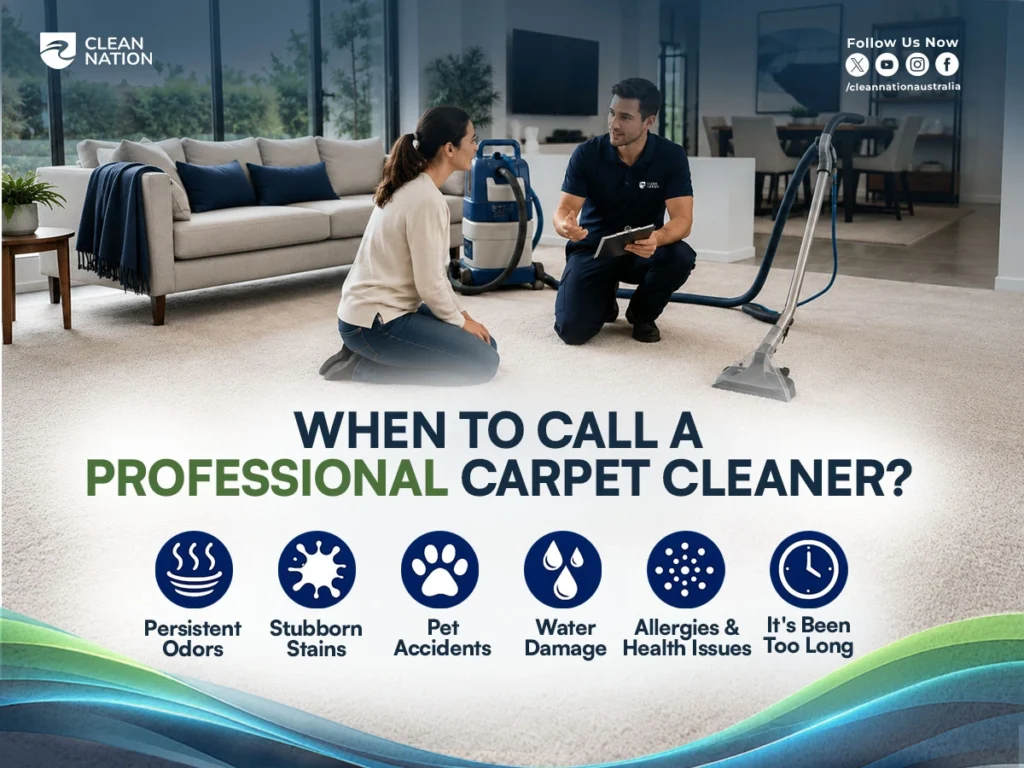
Some jobs are too big for DIY, and it’s good to know when to stop trying and call in help.
If odours keep coming back no matter what you do, something’s trapped deep in the carpet or padding. Same with recurring stains. If a mark keeps showing up after you’ve cleaned it, there’s likely something still working its way to the surface.
Water damage is another one to take seriously. Left too long, it can turn into mould, and mould remediation isn’t a DIY job. It needs proper equipment to remove it fully.
Stubborn stains, like old wine, ink, or dye marks, often won’t budge no matter how hard you scrub. At that point, you’re more likely to damage the carpet than fix it.
This is where hot-water extraction helps. It’s a deep clean that pulls dirt and bacteria out from deep in the fibres, further than home methods can reach. At Clean Nation, our IICRC-certified technicians give your carpet a proper assessment and a clean that actually solves the problem, not just covers it up.
So how often should carpets be cleaned? For most homes, once a year is a reasonable baseline. If you have kids, pets, or a busy household, every six months is a safer bet. High-traffic areas will always need more attention than the rest of the house.
Why Choose Clean Nation for Carpet Disinfection?
Want to leave it to the pros? That’s what we’re here for.
Clean Nation is a family-owned business, not some big faceless company. You’re dealing with people who actually care about doing the job right.
We’re local carpet cleaning experts based in the Central Coast and Newcastle areas. We know the local stuff, like how humidity affects mould, and the wear that comes with beachside living. We’re part of the same community as you.
We handle both residential and commercial carpet cleaning services, so whether it’s your home or your business, we’ve got it covered. And if you’re wondering how do I keep my carpet looking new, that starts with choosing the right team from the get-go.
Not sure what you need? We offer a free quote, so you know what you’re working with before you commit to anything.
Clean, safe, properly disinfected carpets. That’s the goal. If that’s what you’re after, our carpet cleaning services are ready when you are.
Client Experience with Clean Nation
A family in Newcastle called us because their carpet kept smelling musty, even though they vacuumed often. With two kids and a dog, the carpet had seen a lot of mud, spills, and general wear. They’d tried vinegar and baking soda on their own, but the smell always came back.
They reached out to Clean Nation for some advice and ended up booking a full clean. Being a family-run business ourselves, we like to explain what’s actually going on before we start. Turns out moisture had built up under the carpet over time, which happens a lot in humid areas like this.
We used hot-water extraction to get into the fibres and padding, somewhere vacuums and home remedies just can’t reach. The smell was gone by the time we finished, and it stayed gone.
That’s pretty typical of the local jobs we do, whether it’s a family home or a small business. Find what’s actually causing the problem, not just what’s on the surface.
Being a trusted local service means being honest too. If a carpet needs a deep clean, we say so. If it just needs some basic home care, we’ll tell you that instead of trying to sell you something you don’t need.
That’s really what carpet care comes down to. Knowing what the carpet needs, and being straight with people about it.
FAQs
The following are the FAQs:
What kills bacteria in carpet?
A registered disinfectant is your best bet; it’s made to actually kill bacteria, not just cover up the smell. Diluted hydrogen peroxide works too. Heat helps as well, which is why steam cleaning is popular, but it’s not the only thing that gets the job done.
How long can bacteria survive on carpet?
Longer than most people think, sometimes days or even weeks, especially if the carpet stays damp or doesn’t get cleaned often. That’s the main reason regular vacuuming and the occasional deep clean matter so much.
What is the 80% carpet rule?
It’s a rough guide that says about 80% of the dirt in your carpet is just dry soil, the kind a good vacuum can pull out. The other 20% is more stubborn and needs something deeper, like a wash or extraction, to actually shift it. Basically, vacuuming does most of the work, but it’s not the whole job.
Will vinegar ruin your carpet?
Not if you use it right. Diluted vinegar is safe on most carpets. Just test a hidden spot first, since some dyes can react a bit differently, and skip it on wool carpets unless you’ve checked with the manufacturer first.
How often should you disinfect your carpet?
Once every few months is enough for most homes. If you have kids, pets, or someone with allergies, you might want to do it more often, maybe monthly. High-traffic areas usually need more attention than the rest of the room.
Final Thoughts
Keeping your carpet clean doesn’t take much. Just a bit of consistency.
Carpets hold onto more dust and bacteria than most people realise, so looking after them is really part of looking after your whole home. Small habits, done regularly, make the biggest difference over time.
And when a carpet needs more than what you can do at home, that’s when it’s worth getting help.
Got a carpet that needs some attention? Contact us today, and we’ll sort it out for you.