


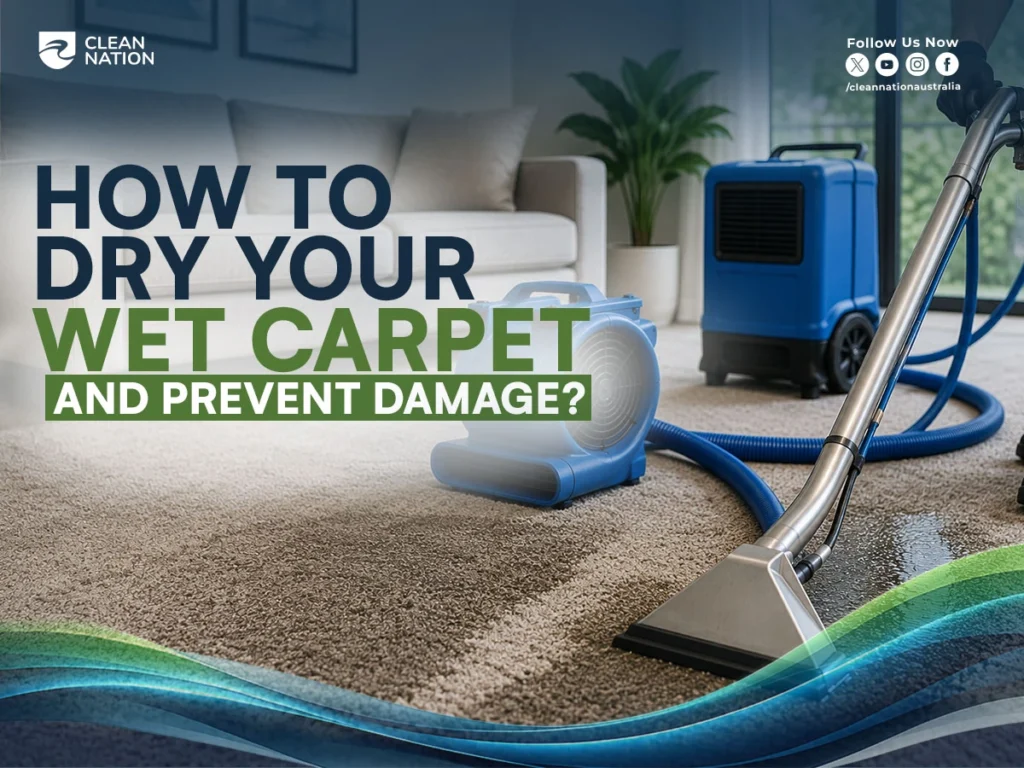
Water damage can quickly lead to mould, odours, and costly repairs if not treated fast. Knowing how to dry your wet carpet and prevent damage is the first step toward protecting your flooring and avoiding bigger problems down the line. Quick water removal, proper drying, good airflow, and moisture detection are all essential to prevent long-term issues. While small spills can often be handled at home, severe water damage may require professional carpet drying and restoration services.
Acting quickly by stopping the water source, removing furniture, and drying the carpet with fans and water extraction can prevent costly repairs. Clean Nation provides expert carpet drying, moisture detection, and restoration to protect your home from long-term damage.
How Do You Know If Your Carpet Is Really Wet Underneath?
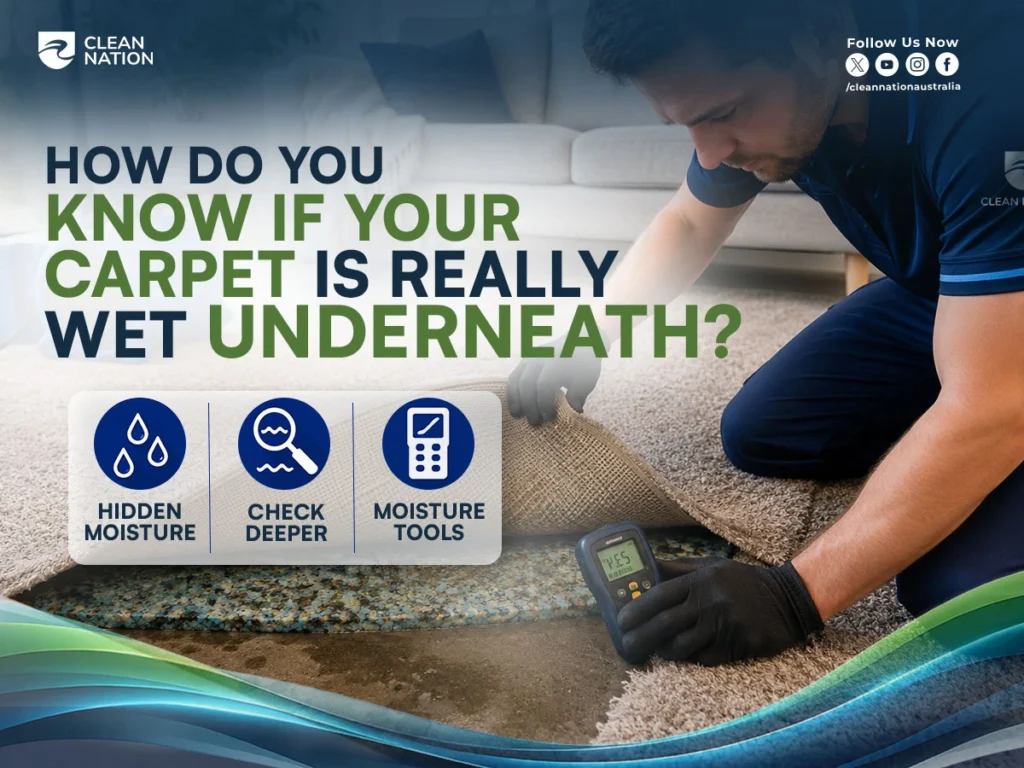
Sometimes a carpet looks dry on the surface but still has hidden water damage underneath. Trapped moisture can remain in the padding and even reach the subfloor, leading to issues such as bad odours, mould growth, and structural damage. Knowing the warning signs early helps with proper carpet moisture detection, supports effective carpet cleaning, and prevents long-term damage to your flooring.
Warning signs your carpet is wetter than it looks
If your carpet feels soft, uneven, or slightly “bouncy,” it may have carpet padding moisture underneath. A musty smell is another common wet carpet symptom that points to trapped water.
You may also notice damp carpet flooring or areas that feel colder than the rest. In severe cases, the floor may feel spongy, which can mean the moisture has already reached the subfloor.
How to check under the carpet and padding?
Lift a small corner of the carpet if possible. If the underside feels wet, sticky, or heavy, it confirms moisture trapped beneath the carpet.
Press different spots with your hand; soft or sinking areas often mean hidden water below. This helps detect subsurface moisture in carpet before it gets worse.
Simple tools to find hidden moisture
A basic moisture meter is the easiest way to check hidden dampness. It quickly shows where carpet moisture detection is needed without pulling up the whole floor.
You can also press a dry towel on the carpet; if it gets damp, moisture is still inside.
At Clean Nation, we always recommend checking early so hidden water damage doesn’t turn into costly subfloor damage.
What to Do in the First 30 Minutes After Your Carpet Gets Wet?
When a carpet gets wet, the first 30 minutes are very important. Quick action on wet carpet can stop serious damage and reduce repair costs. A fast home water emergency response helps prevent water from spreading deeper into the carpet and padding. The goal is to take immediate water damage action as soon as possible.
Stop the water source first
The first step is to stop where the water is coming from. Whether it is a leak, spill, or burst pipe, cutting off the source is essential for emergency carpet water cleanup. This also reduces carpet drying urgency by preventing more water from entering the carpet.
Move furniture and other items out of the way
Remove all furniture, rugs, and objects from the wet area right away. This furniture removal from wet carpet helps prevent stains, swelling, and further damage. It also allows better airflow for rapid carpet drying steps.
How to soak up water the right way?
Start blotting carpet moisture using dry towels. Press down firmly instead of rubbing, as rubbing pushes water deeper into the fibres. Use absorbent towels for carpet drying by replacing wet towels with dry ones until the moisture is reduced. This simple method is an effective immediate water damage action that supports faster drying and helps control emergency carpet water cleanup. Clean Nation recommends acting quickly because a fast response reduces long-term damage risk.
How to Dry a Wet Carpet Fast Step by Step?
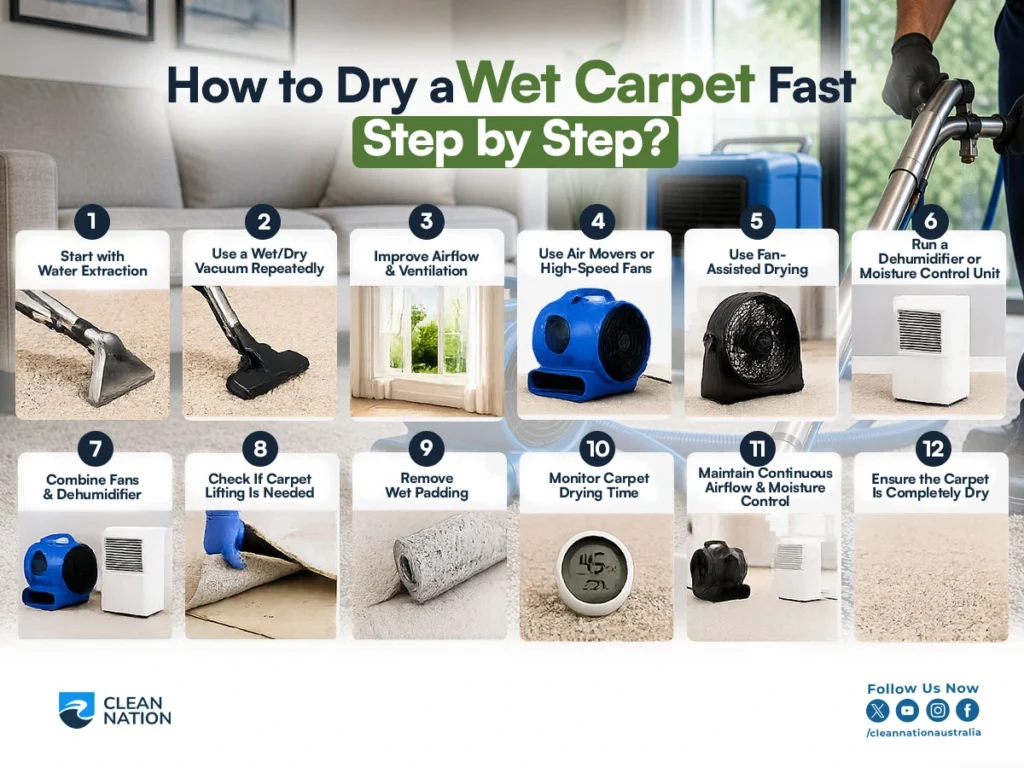
- Start with carpet water extraction using a wet/dry vacuum or professional extraction to remove as much water as possible quickly.
- Use wet/dry vacuum extraction repeatedly over soaked areas to reduce moisture trapped in fibres and padding.
- Improve airflow and ventilation for carpet drying by opening windows and doors to let fresh air circulate.
- Place air movers or high-speed fans around the wet carpet to speed up evaporation.
- Use fan-assisted carpet drying by directing airflow across the carpet surface, not just above it.
- Run a dehumidifier or moisture control unit in the room to pull excess humidity from the air.
- Combine fans and a dehumidifier for a complete deep carpet drying process.
- Check if lifting the carpet is needed in severe cases to allow faster drying of the padding.
- Remove wet padding only if it is fully saturated and slowing down drying of the soaked carpet.
- Monitor carpet drying time, which can range from a few hours to 24–48 hours depending on water level.
- Maintain continuous airflow and moisture control until the carpet is completely dry.
- Clean Nation recommends acting fast because proper steps reduce damage and speed up full recovery.
How To Dry Carpet After Different Types of Water Damage?
How You handle carpet drying after a flood or leak depends on what caused the water. A household water spill is simple, but issues like a burst pipe, carpet flooding, or appliance malfunction water damage need faster and stronger action.
For a washing machine leak or plumbing leak carpet damage, the water is often greywater damage carpet, which may contain mild contamination. Quick drying and water removal are important to stop it from spreading.
Small household water spills usually need quick blotting and basic drying. But larger areas need proper carpet drying after flood or leak methods like airflow, extraction, and dehumidification.
In a burst pipe carpet flooding, water can soak deep into padding and floors, so fast action is critical. If there is floodwater carpet exposure, the water may be dirty carpet and needs stronger cleaning and drying.
The most dangerous case is black water damage carpet, which comes from sewage or highly contaminated sources and should be handled with professional help.
At Clean Nation, we always suggest acting based on the cause of damage so you can dry your carpet safely and prevent long-term problems.
Common Mistakes People Make When Drying a Wet Carpet
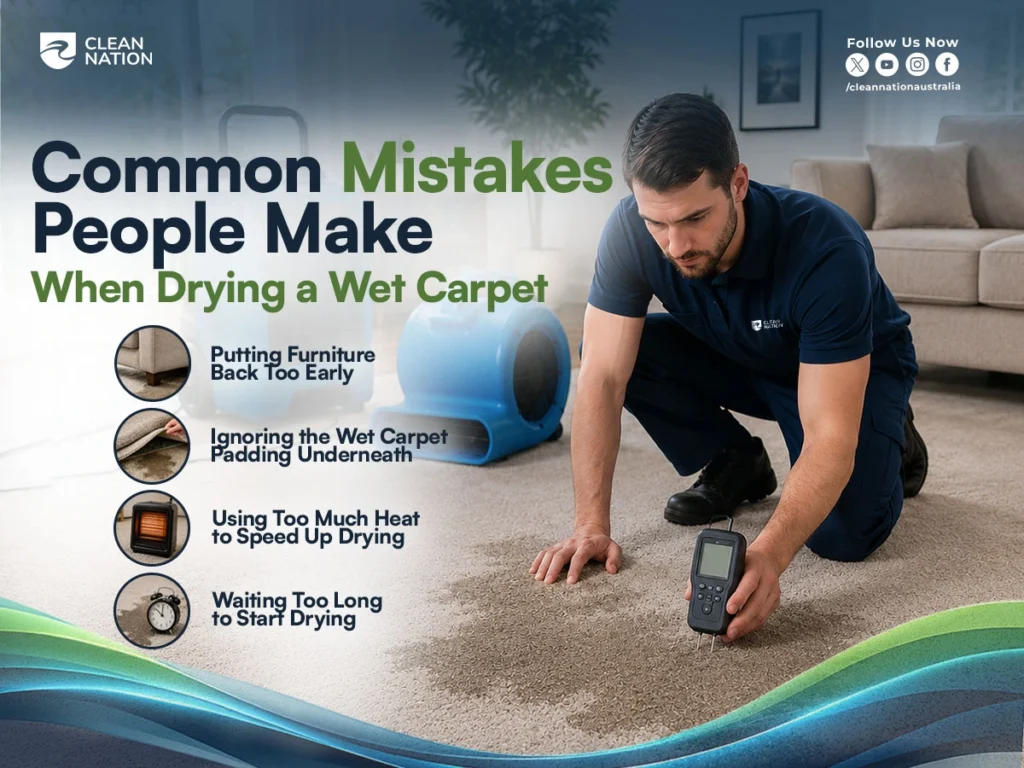
Waiting too long to start drying
Delaying control of wet carpet duration is one of the biggest mistakes. The longer moisture stays, the higher the risk of long-term carpet dampness, water extraction failure, and deep penetration into the backing and subfloor. This delay can also weaken fibres and speed up carpet premature wear, making restoration harder.
Putting furniture back before the carpet is fully dry
Placing furniture too early traps moisture underneath the surface. This leads to carpet backing damage, hidden damp patches, and uneven drying. Over time, it can also reduce carpet structural integrity, causing weak spots and stains that are difficult to remove.
Using too much heat to speed things up
Excessive heat is another common mistake. It increases the heat damage risk to fibres, can shrink carpet materials, and may damage adhesives holding layers together. Instead of helping, it often worsens carpet padding damage and weakens the overall structure.
Forgetting to check the padding underneath
Ignoring the underlay often leads to serious problems. Wet padding can stay hidden and cause ongoing carpet padding damage, mould growth, and bad odours. In severe cases, it may require soaked underlay replacement to fully restore the floor and protect carpet durability.
How to Stop Mould, Mildew, and Bad Smells After Water Damage?
After water damage, carpets can quickly develop problems if not dried properly. There is a 24–48-hour mould risk, where mould growth in carpet and a mildew smell in carpet can start if moisture stays trapped too long.
Fast drying is key to stopping bacterial growth in damp environments and preventing a strong musty carpet smell. Good airflow, extraction, and moisture control help reduce the risk early.
For odour control, carpet odour removal can start with simple baking soda carpet deodorising, which helps absorb mild smells during drying.
In more serious cases, an antimicrobial carpet treatment may be needed to stop mould from returning and to control mould growth in carpet deep inside fibres and padding.
If not treated quickly, damp carpets can also create respiratory health risks from carpet mould, especially for sensitive individuals.
At Clean Nation, we always recommend acting fast to stop moisture early and keep your carpet clean, fresh, and safe.
Should You Dry the Carpet Yourself or Call a Professional?
Small spills with minimal water can often be handled at home using fans, towels, and a wet/dry vacuum. However, if water has soaked deep into the carpet or padding, home methods may not fully remove hidden moisture.
For severe cases, professionals use industrial dehumidifiers and high-powered extraction equipment to dry from top to bottom, not just the surface. A proper assessment also helps determine whether repair or full replacement is the better option, depending on how long the carpet stayed wet, how deep the water reached, and the overall condition of the flooring.
If you’re dealing with a bigger flood or spill, you might be wondering, “ Is same-day carpet cleaning available in Australia? In most cases, yes. Many professional services, including Clean Nation, offer same-day appointments for urgent water damage, since acting quickly is what actually prevents mould and long-term damage.
If there is heavy saturation, hidden moisture, or any uncertainty about contamination, calling Clean Nation is the safer and more cost-effective choice in the long run.
Why Homeowners Trust Clean Nation for Wet Carpet Drying?
Homeowners choose Clean Nation because we respond fast and are available 24 hours a day for urgent carpet drying situations. Our team starts every job with a thorough inspection to assess moisture levels and identify hidden damage before it gets worse.
We use professional-grade water extraction equipment and high-powered air movers to speed up drying and prevent mould, dampness, and odours. For serious cases, our water and mould remediation services ensure the carpet and surrounding environment are fully treated and safe.
People often ask us how often carpets should be cleaned, especially after a water incident, and the honest answer depends on the damage. A dried carpet still needs a proper clean afterward to fully remove any lingering bacteria or residue, so we usually recommend a follow-up clean once everything’s dry, then sticking to a normal yearly schedule after that.
From inspection to full restoration, Clean Nation delivers reliable, effective carpet drying that protects your flooring and gives you peace of mind.
Client Experience with Clean Nation
A homeowner came to us after a burst pipe flooded their living room overnight. By morning, water had spread across the entire carpet and soaked into the underlay, putting the flooring at serious risk of long-term damage and mould growth.
Clean Nation responded the same day as part of our 24-hour emergency service. We started with a full inspection to assess saturation levels and identify any hidden moisture in the padding. From there, we ran professional extraction equipment and deployed high-powered air movers to push airflow through the carpet and speed up drying. An industrial dehumidifier helped control humidity throughout the process.
In areas where moisture had penetrated deeply, we lifted sections of the carpet to check the padding and make sure no trapped water remained underneath.
After continuous monitoring, the carpet was fully dry within 36 hours; no replacement was needed. Fast response, the right equipment, and proper technique turned what could have been a costly replacement into a full, successful restoration.
FAQs
Following are the Faq’s:
What is the best way to dry a very wet carpet?
Extract as much water as possible with a wet/dry vacuum first, then run fans and a dehumidifier continuously until fully dry. Open windows for airflow and avoid walking on it during drying.
How to prevent damage when the carpet gets wet?
Act within the first 30 minutes. Stop the water source, remove furniture, blot up moisture with dry towels, and get fans running immediately. The faster you act, the less damage occurs.
How long can carpet be wet before it is ruined?
48 to 72 hours. After that, mould sets in, fibres break down, and moisture can reach the subfloor, causing permanent structural damage.
What pulls moisture out of carpet?
A wet/dry vacuum for initial extraction, fans and air movers for evaporation, and a dehumidifier to pull humidity from the air. Together, these three work faster than any single method alone.
Is it okay to sleep in a room with wet carpet?
Not ideal. Wet carpet can release musty odours and within 24–48 hours starts growing mould, which affects air quality. If the carpet has been wet for more than a few hours, sleeping in that room can irritate airways, trigger allergies, and cause breathing issues, especially for children or anyone with asthma. Get the room dried out first, or sleep elsewhere until it is.
Conclusion
A wet carpet is manageable if you act fast and do things right. The longer you wait, the deeper the moisture goes and the more expensive the fix becomes. For small spills, quick blotting and good airflow are usually enough. For anything more serious, burst pipes, flooding, or water you cannot fully account for it is worth calling in a professional. Clean Nation handles everything from initial assessment to full restoration, so you are not left guessing whether your carpet is actually dry or just dry on the surface.
Contact us today or call 61480810142 to get your carpet dried fast and done right.