


Gym equipment passes through a lot of hands in a single day. Treadmill controls are pressed repeatedly, dumbbells move from rack to bench, adjustment pins are pulled between sets, and seats and handles pick up sweat and body oils.
So, how often should gym equipment be cleaned?
As a practical baseline, shared gym equipment should be cleaned at least daily, while frequently touched surfaces may need attention between users or several times during busy periods. Deeper cleaning can then be scheduled weekly or periodically depending on the equipment, usage levels and how quickly dirt builds up.
No single cleaning frequency suits every facility. A small personal training studio and a busy 24-hour gym in Sydney can have completely different cleaning demands.
This guide explains how often different types of gym equipment should be cleaned, when disinfection may be appropriate and which factors should determine your cleaning schedule.
How Often Should You Clean Gym Equipment?
The easiest way to determine how often to clean gym equipment is to consider how frequently members touch and use it.
Handles, grips, touchscreens, control buttons, adjustment pins and benches generally need more frequent attention because multiple people make direct contact with them throughout the day. Machine frames, bases and less frequently touched areas can usually follow a longer cleaning cycle.
A practical starting point for Sydney gyms and fitness centres is:
| Equipment or Surface | Routine Cleaning | More Detailed Cleaning |
| Cardio handles and controls | After use where practical or during regular rounds | Daily |
| Dumbbells and kettlebells | Regularly throughout busy periods | Daily |
| Barbells and shared grips | Regularly throughout the day | Daily |
| Weight benches | After heavy use or during cleaning rounds | Daily |
| Resistance machine touchpoints | Throughout the day as required | Daily |
| Touchscreens and consoles | Regularly with a suitable product | Daily |
| Exercise and yoga mats | Between shared sessions or use | Daily |
| Equipment frames and bases | Daily as required | Weekly detailed clean |
| Areas underneath large machines | Inspect regularly | Scheduled deeper clean |
These frequencies are starting points rather than fixed rules. A high-traffic Sydney gym operating from early morning until late at night may need more frequent cleaning than a small studio with appointment-based sessions.
For a broader routine covering workout areas, bathrooms, floors, change rooms and other parts of the facility, see our gym cleaning checklist.
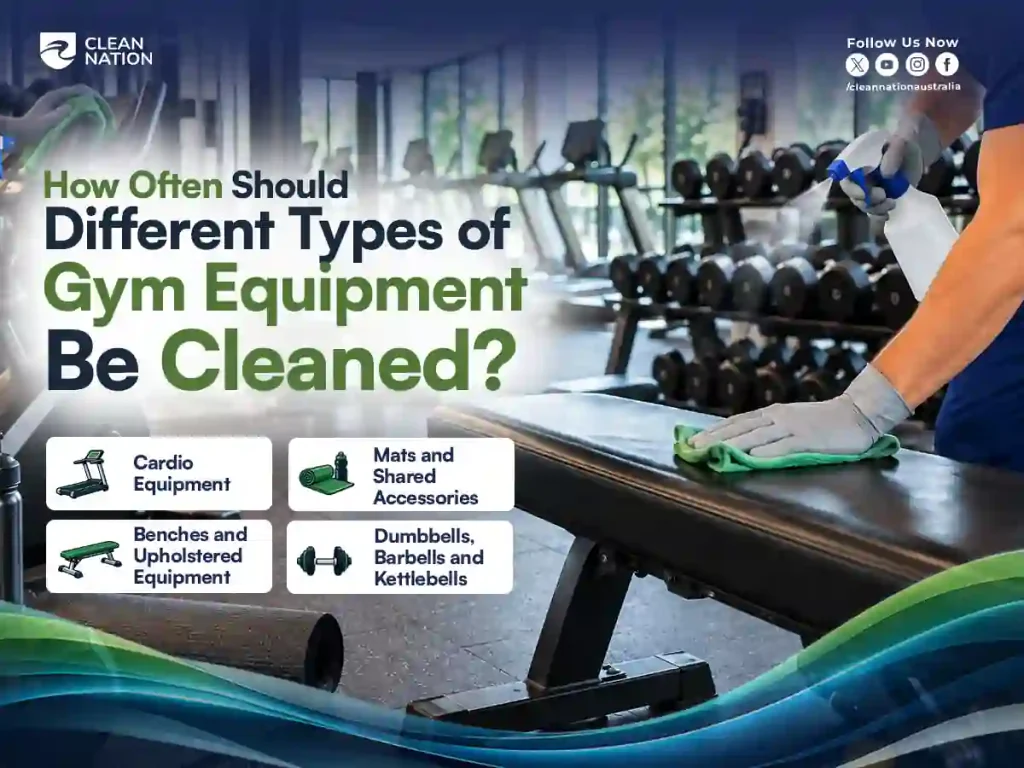
How Often Should Different Types of Gym Equipment Be Cleaned?
Different equipment collects sweat, dust and residue in different ways. The number of users, material, design and amount of direct contact should all influence cleaning frequency.
Cardio Equipment
Treadmills, exercise bikes, rowing machines, cross-trainers and stair climbers contain several high-touch areas within a relatively small space.
Pay particular attention to:
- handles and handrails
- control buttons
- touchscreens
- heart-rate sensors
- adjustment controls
- seats and pads
In busy commercial gyms, these touchpoints should be checked regularly throughout operating hours, with the equipment receiving a complete routine clean at least daily.
Electronic displays need extra care. Avoid assuming that a stronger cleaning chemical will produce a better result. Use a product suitable for the surface and follow the equipment manufacturer’s care instructions, particularly around screens, sensors and control panels.
Dumbbells, Barbells and Kettlebells
Free weights can pass through dozens of hands during a busy training period. Textured grips can also collect sweat, body oils and residue.
For commercial gyms, free weights should form part of the daily equipment cleaning routine, with additional attention during busy periods.
Focus on areas such as:
- dumbbell handles
- barbell knurling
- kettlebell grips
- weight plates
- collars
- frequently handled attachments
Don’t forget the racks. Cleaning the weights while allowing dust and grime to build up on their storage surfaces leaves part of the area untreated.
Strength and Resistance Machines
Strength and resistance machines often have more touchpoints than are immediately obvious.
Along with handles and grips, cleaners should consider:
- selector pins
- adjustment levers
- cable attachments
- seat controls
- pads
- buttons
- handles and grips
Frequently handled components may need cleaning several times during high-traffic periods. The full machine can receive its normal daily clean, with frames, bases, seams and less accessible areas included in scheduled detailed cleaning.
Benches and Upholstered Equipment
Weight benches and padded equipment come into direct contact with clothing, skin and sweat.
Visible sweat should be dealt with promptly rather than being left until the next scheduled deep clean. Commercial facilities should inspect and clean benches daily, increasing the frequency during peak periods where necessary.
Care is important with upholstered surfaces. Repeated soaking or unsuitable chemicals may affect certain materials. Follow the manufacturer’s cleaning instructions and use products designed for the surface.
Cleaning also creates an opportunity to spot split upholstery, cracks or other visible damage that may need maintenance.
Mats and Shared Training Accessories
Exercise mats, yoga mats, medicine balls, foam rollers, resistance bands and other shared accessories can move between members and training zones quickly.
Shared mats should be cleaned between classes or users where appropriate and allowed to dry before being stacked or returned to storage.
Placing damp mats directly into enclosed storage can contribute to unpleasant odours and moisture build-up.
A mat used by several group classes each day will naturally need more attention than equipment assigned to one person in a low-traffic personal training studio.
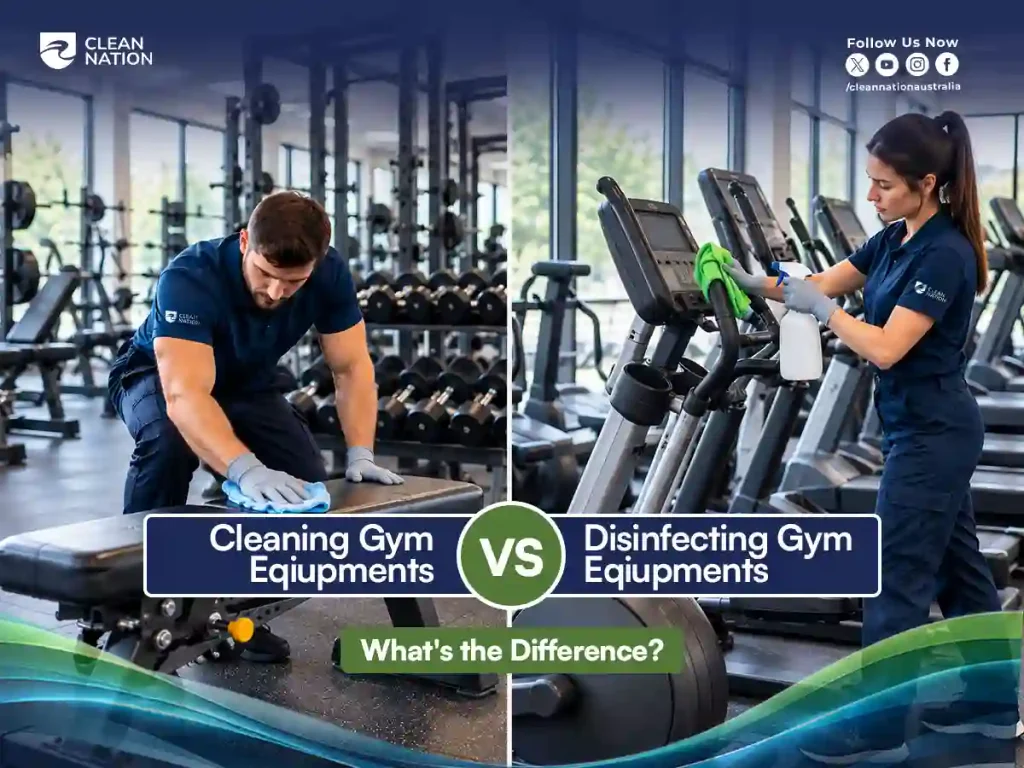
Cleaning vs Disinfecting Gym Equipment – What’s the Difference?
Cleaning and disinfecting aren’t the same process.
Cleaning removes sweat, dirt, dust, body oils and other material from a surface.
Disinfecting involves applying an appropriate disinfectant to inactivate or kill specified microorganisms.
Understanding the difference matters because simply spraying disinfectant over visible grime isn’t always the correct process.
The Australian Therapeutic Goods Administration advises users to follow a disinfectant’s label instructions, including requirements relating to pre-cleaning, compatible surfaces, dilution, application and contact time.
That means gym operators shouldn’t assume one chemical or method is appropriate for every machine.
Rubber grips, metal frames, vinyl upholstery, plastic controls and electronic touchscreens can have different care requirements. Check both the cleaning-product directions and the equipment manufacturer’s instructions before applying a product.
How Often Should Gym Equipment Be Disinfected?
There isn’t one universal disinfection frequency for every piece of gym equipment.
The decision should reflect how frequently a surface is touched, how heavily the facility is used and whether there is an increased contamination risk.
For example, the handle of a heavily used treadmill or dumbbell receives substantially more direct contact than the side of the same machine’s frame. Treating both areas as though they require identical attention doesn’t make much practical sense.
Busy gyms can include high-contact surfaces in cleaning rounds throughout operating hours. Additional disinfection may also be appropriate where contamination risk increases, such as following a body-fluid incident or an infectious illness concern.
The key principle is simple:
More disinfectant isn’t automatically better.
Use the appropriate product for the surface and follow its specified application and contact time.
What Changes How Often Gym Equipment Needs Cleaning?
A written schedule provides consistency, but the actual use and condition of the facility should determine whether cleaning needs to happen more frequently.
Member Traffic
Member numbers have a direct impact on cleaning frequency.
A treadmill used a handful of times during the day doesn’t experience the same level of contact as one used continuously through morning and evening peak periods.
The more people using a piece of equipment, the more frequently it should generally be inspected and cleaned.
Opening Hours
Longer opening hours mean equipment remains in use for longer periods between full facility cleans.
A 24-hour gym in Sydney may therefore need cleaning rounds distributed across different periods rather than relying on a single end-of-day clean.
Equipment Popularity
Usage isn’t distributed evenly across a gym floor.
Popular benches, dumbbells, cable attachments and cardio machines may see substantially more traffic than neighbouring equipment.
Cleaning schedules should account for those differences instead of treating every machine identically.
Group Fitness Classes
Group sessions can put a large number of people through the same equipment within a short period.
Spin bikes, yoga mats, exercise mats, resistance bands, medicine balls and other shared accessories may therefore need cleaning between classes rather than simply once at the end of the day.
Visible Sweat, Dirt or Contamination
A timetable shouldn’t override what staff can see.
If a bench is covered in sweat or a machine has visible dirt or residue, clean it promptly rather than waiting for the next scheduled round.
Spills and body-fluid contamination also require prompt attention using an appropriate cleaning procedure.
Member Cleaning Habits
Providing wipes and encouraging members to wipe equipment after use can help manage sweat and residue between staff cleaning rounds.
However, member wipe-downs shouldn’t replace the gym’s scheduled cleaning programme.
Members generally focus on the obvious surfaces they have touched. Staff or professional cleaners can address the wider machine, less visible contact points and surrounding areas as part of a structured routine.
Should a Small Studio and a Busy Sydney Gym Follow the Same Schedule?
No. Cleaning frequency should match actual facility use.
A small personal training studio may operate through scheduled appointments with relatively few people using the equipment at one time. Staff can often identify exactly which machines and accessories have been used.
A busy commercial gym in Sydney may have a completely different pattern. Members can arrive continuously before work, during lunch, after work and into the evening. The same bench, treadmill or set of dumbbells can pass through many users within a few hours.
Instead of asking:
“How many times should we clean every machine each day?”
A better question is:
“Which equipment receives the most contact, and how quickly does it become dirty again?”
You can then group equipment according to usage:
- Very high use: additional checks during peak periods
- High use: routine rounds plus a complete daily clean
- Moderate use: daily cleaning
- Low use: regular inspection with cleaning based on use and condition
These categories aren’t permanent. Review them when membership levels, class schedules, equipment layouts or opening hours change.
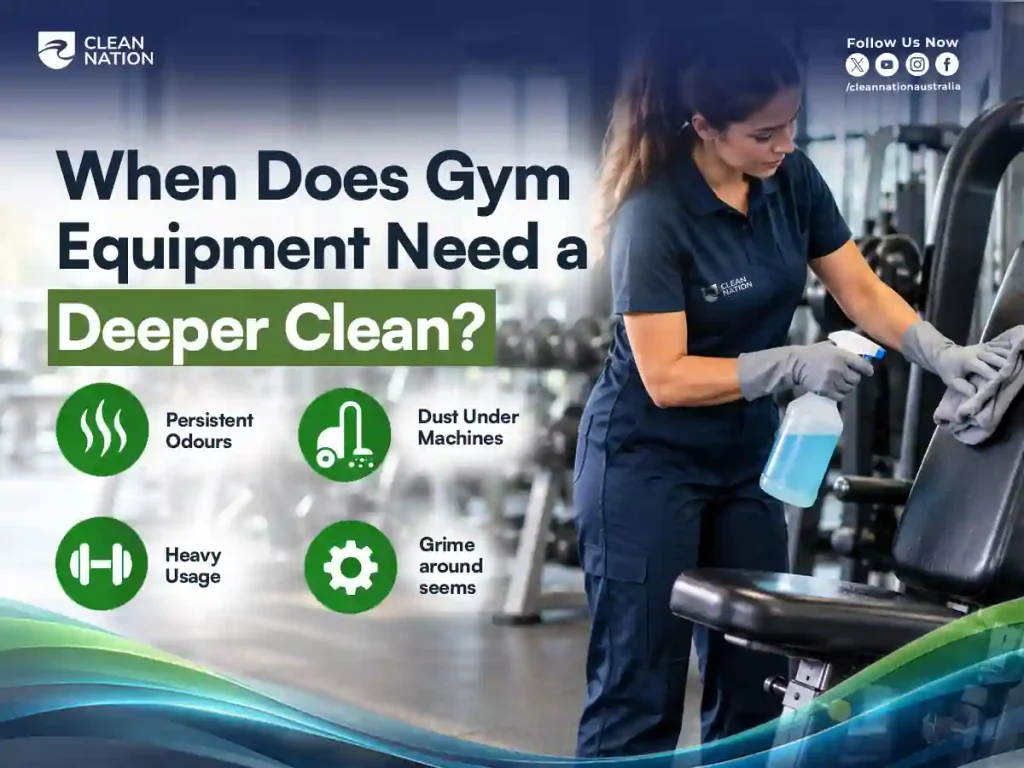
When Does Gym Equipment Need a Deeper Clean?
Routine cleaning deals mainly with the surfaces members use and touch regularly. A deeper clean reaches the areas that normal wipe-downs can miss.
Depending on the machine, this may include:
- equipment bases
- frame joints
- seams around pads
- less accessible handles
- storage racks
- areas underneath machines
- dust around external components
Rather than attempting to deep-clean every machine every day, gyms can include these areas in a scheduled rotation.
A deeper clean may need to happen sooner if you notice:
- grime returning quickly after normal cleaning
- persistent odours
- residue around seams or grips
- dust collecting around equipment bases
- dirt underneath machines
- unusually heavy usage
- equipment that hasn’t received detailed cleaning recently
Cleaning staff shouldn’t open or work inside electrical or mechanical components unless permitted by the manufacturer and the person carrying out the work is appropriately qualified. Equipment servicing and routine cleaning are separate jobs.
For the wider daily, weekly and monthly tasks around your facility, our gym cleaning checklist covers floors, bathrooms, change rooms and other areas without duplicating the equipment-specific guidance here.
Build the Right Gym Equipment Cleaning Schedule
There is no useful one-number answer to how often gym equipment should be cleaned.
Start with routine daily cleaning, identify the machines and surfaces receiving the highest level of contact, add extra cleaning during peak periods and schedule deeper work before grime becomes difficult to manage.
Most importantly, keep reviewing the schedule.
A cleaning plan that works for a quiet Sydney studio may no longer be suitable after membership increases, operating hours expand or more group classes are introduced.
For facilities that need consistent cleaning without taking staff away from members and day-to-day operations, Clean Nation provides gym and fitness centre cleaning for exercise equipment, workout spaces and other high-use areas.
Clean Nation also provides cleaning services across Australia for commercial and residential properties, including services for businesses in Sydney.
The aim isn’t to clean every piece of equipment constantly. It is to match cleaning frequency to how the equipment is actually being used.
FAQs
Can cleaning gym equipment too frequently damage it?
It can, if you repeatedly use unsuitable chemicals or cleaning methods. Screens, rubber grips, painted surfaces and upholstered pads can have different care requirements. Follow the equipment manufacturer’s instructions and make sure the cleaning product is compatible with the surface.
Should new gym equipment be cleaned before members use it?
It is sensible to inspect and prepare newly delivered equipment before putting it into service. Dust, fingerprints or residue from transport and installation may remain on surfaces. Use the manufacturer’s recommended cleaning method.
Who should be responsible for cleaning equipment in a Sydney gym?
Responsibilities can be shared. Members may wipe equipment after use, staff can conduct checks during operating hours, and cleaners can handle scheduled routine and detailed cleaning. Clearly assigning each task reduces the chance that an important area gets overlooked.
Does unused gym equipment still need cleaning?
Yes, although it may not require the same frequency as heavily used machines. Equipment can still collect dust around frames, consoles and bases even when members rarely use it. Inspect low-use equipment regularly and clean it according to its condition.
Should Sydney gyms change cleaning frequency during busy periods?
Yes. If membership numbers, class attendance or daily visits increase, review the cleaning schedule as well. Equipment that normally receives moderate use may become high-use during peak periods and need additional cleaning checks.