

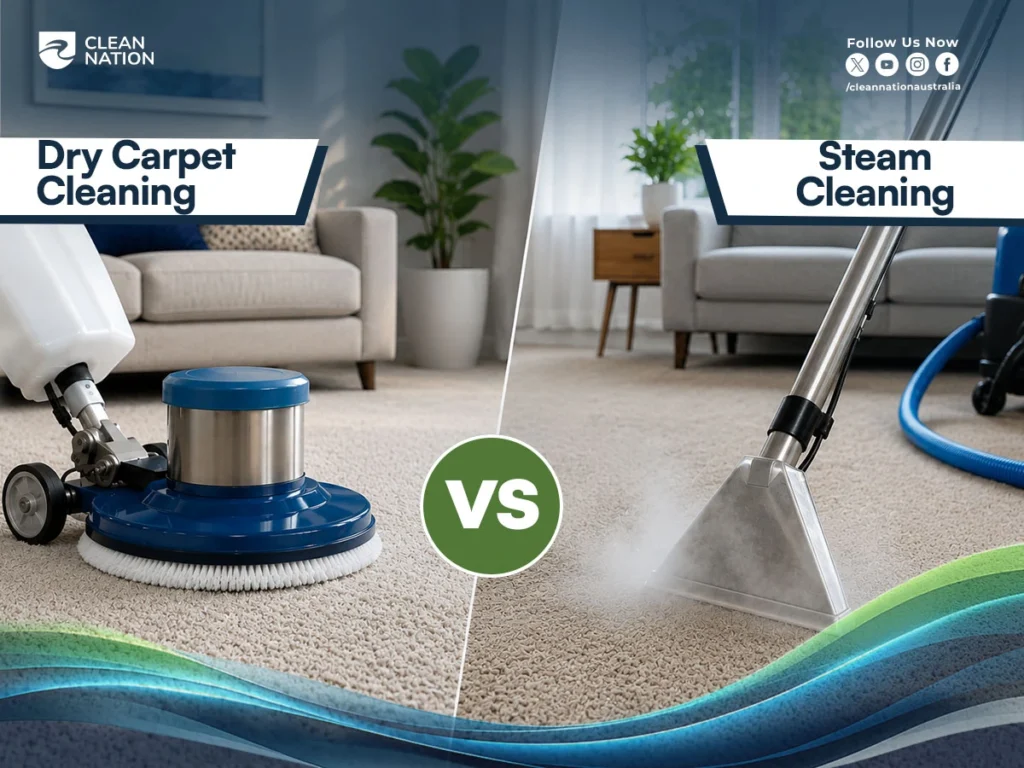
When comparing dry carpet cleaning vs steam cleaning, it comes down to moisture, time, and depth of clean. Dry carpet cleaning uses minimal moisture and dries in 1–2 hours, making it ideal for delicate fibres and busy spaces. Steam cleaning (hot water extraction) penetrates deeper to remove tough stains, pet odours, and embedded allergens, but takes longer to dry. Choose dry cleaning for quick turnaround and light maintenance, and steam cleaning for a deeper, more thorough clean.
What Is Dry Carpet Cleaning?
Dry carpet cleaning uses very low moisture to clean your carpet without soaking it through to the backing. Despite the name, it is not completely waterless; it just uses enough moisture to get the job done without leaving your floors wet for hours.
Here is how it works. A technician pre-vacuums the carpet first to remove loose dirt and surface dust. Then a dry cleaning compound is applied to the fibres. This compound attracts and binds to oily soils and grime sitting deep in the carpet. A rotary cleaning machine with high-speed absorbent cotton pads then agitates the fibres and lifts the loosened dirt out.
The biggest advantage is drying time. Because so little moisture is used, your carpet is usually ready to walk on within one to two hours, sometimes sooner.
At Clean Nation, we use professional-grade dry cleaning equipment and fibre-safe compounds that get the job done without any unnecessary disruption to your day.
What Is Steam Cleaning?
Despite the name, steam cleaning does not actually use steam. The correct term is hot water extraction, and here is how it works.
A technician pre-treats the carpet with a professional cleaning solution to loosen embedded dirt and grime. Then a truck-mounted carpet cleaning machine injects highly pressurised hot water deep into the carpet fibres. A powerful suction system immediately extracts the water back out, pulling dirt, bacteria, allergens, and residue along with it.
The result is a deep clean that goes well beyond the surface, something regular vacuuming or dry cleaning cannot always achieve.
The main trade-off is drying time. Carpets typically take three to six hours to dry, depending on the ventilation in your home.
At Clean Nation, our truck-mounted extraction machines deliver stronger suction and better soil removal than portable rental units. For carpets that need a genuine deep clean, hot water extraction is the most thorough method available.
Dry Carpet Cleaning vs Steam Cleaning: Side-by-Side Comparison
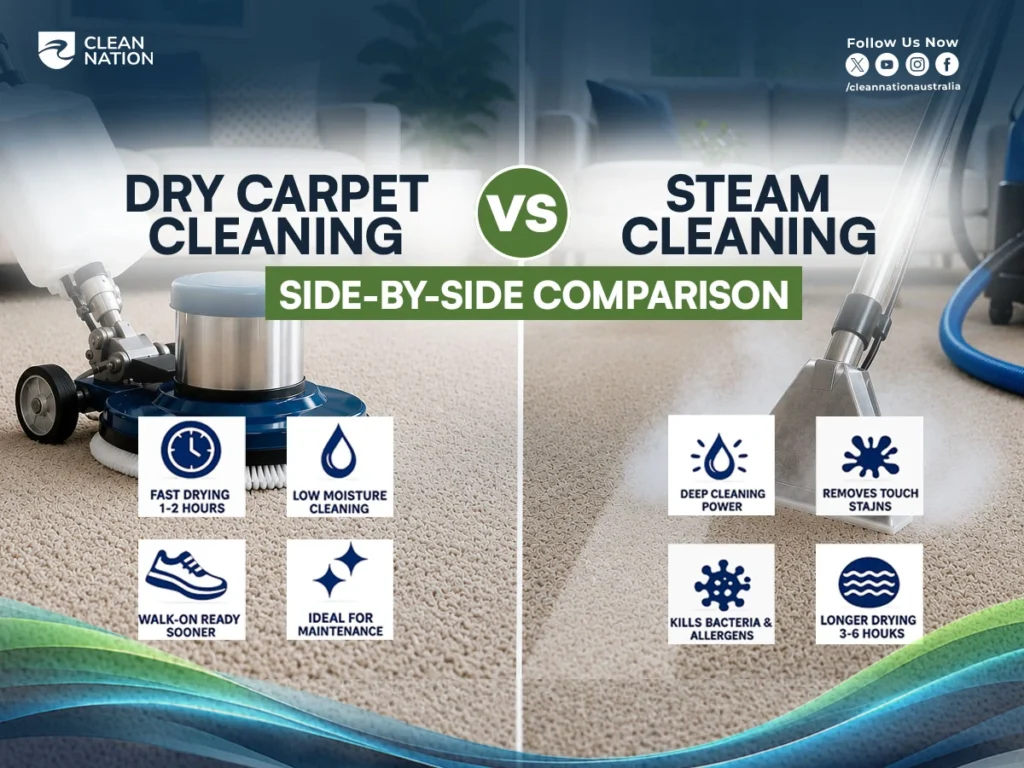
Not sure which method suits your situation? Here is a straightforward comparison to help you decide.
| Dry Carpet Cleaning | Steam Cleaning (Hot Water Extraction) | |
| Moisture Level | Very low moisture | High moisture |
| Drying Time | 1 to 2 hours | 3 to 6 hours |
| Deep Clean | Surface to mid-level clean | Deep fibre clean |
| Best For | Maintenance cleans, delicate carpets, quick turnaround | Heavy stains, allergens, pet odours, restorative cleaning |
| Cleaning Performance | Excellent for light to moderate soiling | Excellent for heavy soiling and embedded dirt |
| Carpet Types | Wool, natural fibres, moisture-sensitive carpets | Synthetic fibres, nylon, polyester, polypropylene |
| Walk-On Time | Almost immediately | 3 to 6 hours |
| Cost | Comparable to steam cleaning | Comparable to dry cleaning |
| Chemical Use | Cleaning compound and solvent-based | Water-based with pre-treatment solution |
Neither method is better than the other across the board. It really comes down to your carpet type, the level of soiling, and how quickly you need the carpet back in use.
At Clean Nation, we assess your carpet before recommending a method. In some cases, a combined approach using both dry cleaning and hot water extraction delivers the best result, particularly for carpets that are heavily soiled but also moisture-sensitive.
Which Carpet Types Work Best with Each Method?
The cleaning method that works best for your carpet depends largely on what your carpet is made of. Using the wrong method on the wrong fibre type can cause shrinkage, colour fading, or permanent damage. Before booking any professional cleaning, it helps to know your carpet material.
Carpets Best Suited for Dry Cleaning
Natural fibre carpets need to be handled with care. Wool, jute, sisal, cotton, and other natural fibres are moisture-sensitive, meaning too much water can cause them to shrink, distort, or brown. Heat-sensitive fibres can also react badly to the high temperatures used in hot water extraction.
For these carpets, low-moisture dry cleaning is the safer and smarter choice. It cleans effectively without saturating the fibres or risking damage to the carpet backing.
If your carpet manufacturer recommends avoiding wet cleaning methods, dry cleaning is almost always the right call.
Carpets Best Suited for Steam Cleaning
Synthetic carpet fibres handle moisture and heat much better than natural fibres. Nylon, polyester, polypropylene, and triexta carpets are all well-suited to hot water extraction. These materials are durable, non-absorbent, and respond well to the deep cleaning performance that steam cleaning delivers.
If your carpet is dealing with heavy stains, embedded dirt, pet odours, or allergen build-up, steam cleaning on synthetic fibres will give you the most thorough result.
Not sure what fibre your carpet is made from? At Clean Nation, we carry out a full carpet fibre identification and assessment before recommending any cleaning method. That way, you get the right cleaning every time without any risk to your carpet.
What to Think About Before Choosing a Cleaning Method?
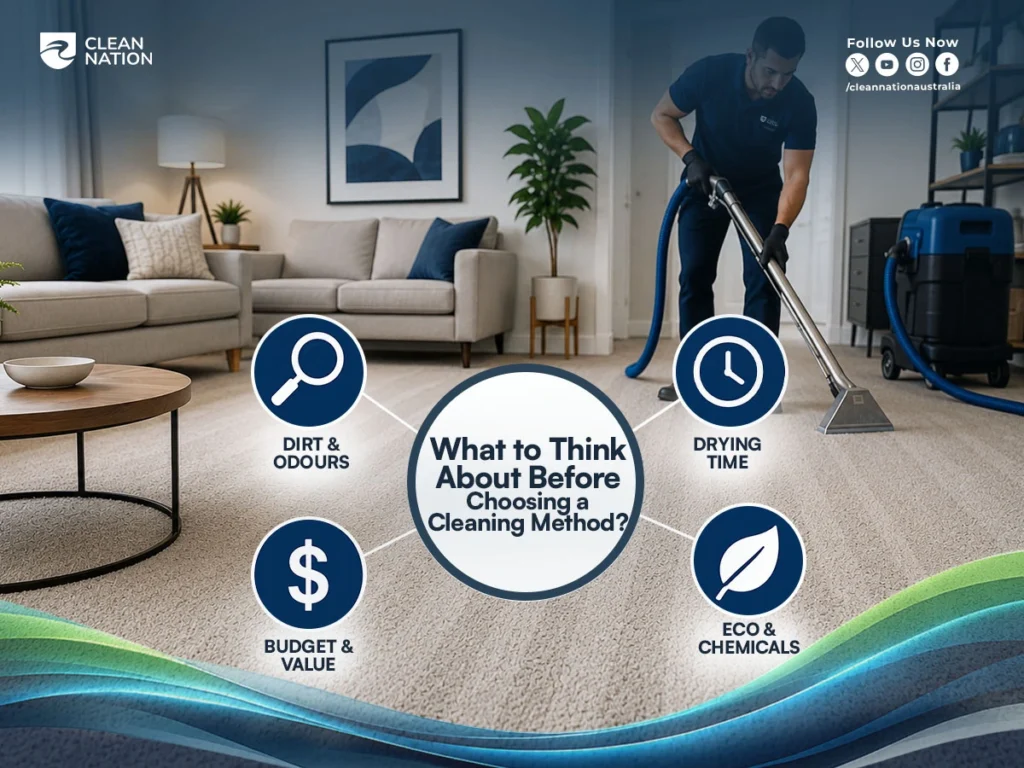
No single method works for every carpet or every situation. Here are the key things to consider before making a decision.
Level of Dirt, Stains, and Odours
Before booking any professional carpet cleaning, take an honest look at the condition of your carpet. Is it just looking a little flat and dull from everyday use, or are there visible stains, strong odours, and heavily soiled areas that have built up over time?
Light surface soiling and general dullness usually mean your carpet needs a maintenance clean. Visible stains, pet odours, or carpet that has not been cleaned in over a year mean it needs something more thorough.
Being honest about your carpet condition before you book saves you time and makes sure you get the right clean from the start, rather than a repeat visit.
Drying Time Requirements
If you need your carpet to dry quickly, dry cleaning is the clear winner at one to two hours. Steam cleaning can take anywhere from three to six hours with adequate ventilation. In some cases, without proper airflow, drying can take longer. If your household cannot manage wet floors for half a day, factor that into your decision.
Budget and Long-Term Value
Both methods are comparably priced for a professional clean. The real cost consideration is long-term carpet care. Regular dry cleaning as routine maintenance, combined with periodic steam cleaning, extends your carpet’s lifespan and avoids costly early replacement. Think of it as carpet preservation rather than just a one-off clean.
Environmental and Chemical Concerns
Dry cleaning uses cleaning compounds and solvents, while steam cleaning relies primarily on hot water with a pre-treatment solution. If non-toxic cleaning products and low water consumption are important to you, discuss this with your technician. At Clean Nation, we offer eco-friendly carpet cleaning options that minimise chemical usage and support sustainable cleaning practices without compromising on results.
Pros and Cons of Each Method
Here is a quick summary to help you decide at a glance. Both methods work well when matched to the right situation.
Dry Carpet Cleaning
Pros
- Walk-on ready within one to two hours.
- Safe for wool, natural, and moisture-sensitive carpets.
- Minimal disruption to your home or business.
- Ideal for routine maintenance and regular upkeep.
- No risk of carpet browning or backing damage from over-wetting.
Cons
- Does not deliver the same deep clean as hot water extraction.
- Cleaning compounds can leave residue if not properly managed.
- Less effective on heavy soiling, embedded dirt, and stubborn stains.
Steam Cleaning (Hot Water Extraction)
Pros
- Deep cleans right through the carpet fibre
- Most effective for heavy stains, pet odours, and allergen removal
- Removes bacteria, dust mites, and mould spores
- Restores heavily soiled and neglected carpets
- Residue-free result when done with professional equipment.
Cons
- Longer drying time of three to six hours
- Not suitable for wool, jute, or moisture-sensitive natural fibres
- Risk of over-wetting if carried out with low-grade equipment
- Requires adequate ventilation for proper drying.
When Should You Choose Dry Carpet Cleaning?
There are a few situations where dry carpet cleaning is clearly the right call.
You need quick drying. If you have kids, pets, or a busy household, waiting hours for wet carpet is not practical. Dry cleaning gives you a walk-on-ready carpet within one to two hours.
You want routine maintenance. Dry cleaning is ideal for regular upkeep between deeper steam cleans. It keeps your carpet fresh and extends its life without any major disruption.
You run a business. Minimal disruption and fast turnaround make dry cleaning the practical choice for offices, retail spaces, and rental properties.
At Clean Nation, we recommend dry cleaning as part of a regular carpet maintenance schedule, especially for any situation where same-day carpet use matters.
When Should You Choose Steam Cleaning?
Steam cleaning is the right choice when your carpet needs more than a surface refresh.
Your carpet has deep stains. Coffee, wine, pet accidents, and other stubborn stains that have worked their way into the fibre need hot water extraction to fully lift them out. Surface cleaning simply cannot reach them.
Allergens and bacteria are a concern. Hot water extraction removes dust mites, pet dander, mould spores, and other allergens that build up in carpet fibres over time. If someone in your home suffers from allergies or asthma, regular steam cleaning makes a genuine difference to indoor air quality.
Your carpet has heavy soiling or embedded dirt. High foot traffic areas accumulate dirt deep in the fibre that vacuuming cannot fully extract. Steam cleaning is the most effective method for these situations.
Your carpet is overdue for a deep clean. If your carpet has not been professionally cleaned in over a year, hot water extraction is the best way to restore it to a hygienic and fresh condition.
At Clean Nation, our truck-mounted steam cleaning equipment delivers powerful carpet sanitisation that goes well beyond what rental machines or DIY methods can achieve.
Dry Carpet Cleaning vs Steam Cleaning for Specific Situations
The best cleaning method often comes down to your specific household or environment. Here is what Clean Nation recommends for each situation.
Homes with Pets
Pet stains and pet odours need more than a surface clean. Steam cleaning is the stronger option because hot water extraction penetrates deep into the carpet pile, flushing out the bacteria and residue that cause the odour at the source. It also removes pet dander that builds up in fibres over time.
For routine upkeep between deep cleans, pet-friendly dry cleaning keeps things fresh without the wait.
Homes with Children
Babies and toddlers spend a lot of time on the floor, so what goes into your carpet matters. Steam cleaning with non-toxic cleaning products is the preferred choice for family homes because it sanitises the carpet without leaving harmful chemical residue behind.
For quick maintenance cleans, dry cleaning is a safe and practical option that gets your carpet back in use fast.
Allergy and Asthma Sufferers
For sensitive households, steam cleaning is the clear recommendation. Hot water extraction removes dust mites, allergens, bacteria, and mould spores that trigger symptoms. Regular steam cleaning genuinely improves indoor air quality for anyone with respiratory sensitivities.
High-Traffic and Commercial Areas
Heavy foot traffic grinds dirt deep into carpet fibres, creating grey traffic lanes and accelerating wear and tear. Steam cleaning is the most effective method for restoring these carpets.
For commercial spaces where downtime is a concern, dry cleaning works well for regular maintenance between periodic steam cleans. At Clean Nation, we tailor a cleaning schedule that keeps carpets looking professional without disrupting your operations.
Common Carpet Cleaning Mistakes to Avoid
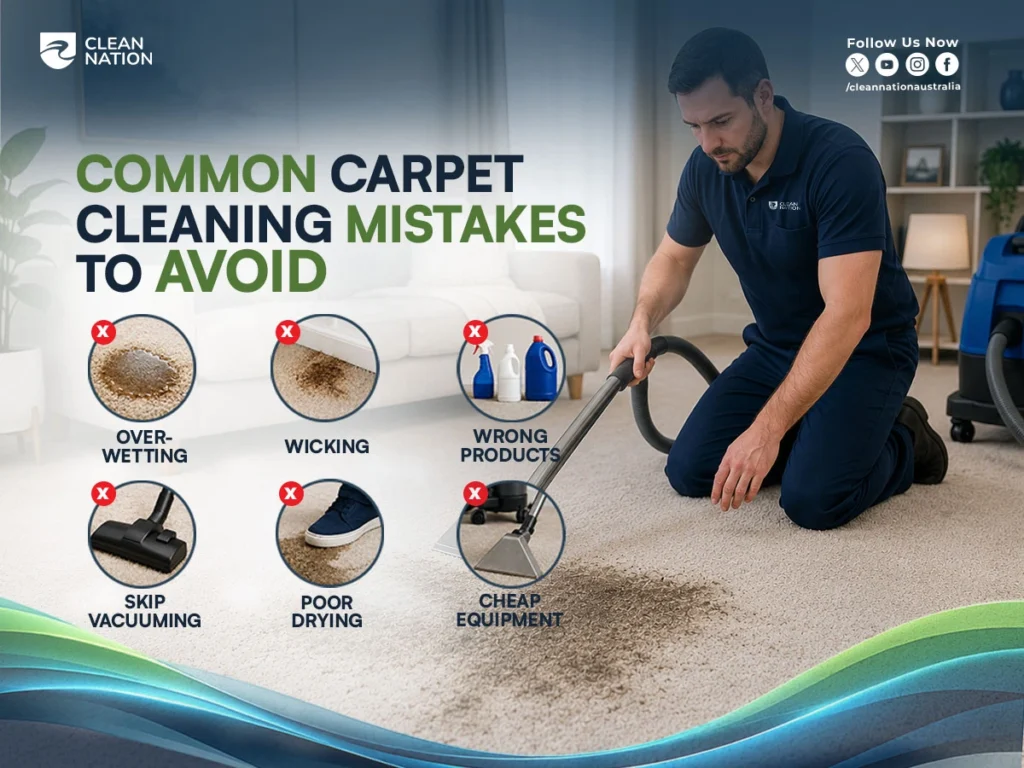
- Over-wetting the carpet. Too much water soaks through to the carpet backing, causing browning, backing damage, and mould growth underneath.
- Ignoring wicking. If a stain reappears days after cleaning, that is wicking. Moisture draws the stain back up to the surface as the carpet dries. Proper soil extraction prevents this.
- Using the wrong cleaning product. Harsh or unsuitable chemicals cause colour fading and fibre damage that cannot be reversed. Always check what is safe for your carpet type first.
- Skipping the pre-vacuum. Jumping straight into wet cleaning without removing loose dirt first pushes surface soil deeper into the fibre.
- Not allowing proper drying time. Walking on a damp carpet or restricting airflow leads to residual cleaning product sitting in the fibre, which attracts dirt faster and leaves your carpet looking dull sooner.
- Using cheap rental equipment. Low-powered machines leave excess moisture behind and fail to extract properly, increasing the risk of carpet shrinkage and reappearing stains.
At Clean Nation, our technicians are trained to avoid all of these issues from the start, protecting your carpet and delivering results that actually last.
Why Choose Clean Nation for Carpet Cleaning?
There are plenty of carpet cleaning companies out there. Here is why Clean Nation stands out.
We assess before we clean. Every job starts with a proper carpet inspection. We identify your carpet type, assess the soiling, and recommend the right method for your situation.
We use professional-grade equipment. Our truck-mounted extraction machines and dry cleaning equipment deliver results that rental machines and DIY methods simply cannot match.
Our technicians know carpets. Every Clean Nation technician understands carpet fibres, cleaning chemistry, and how to handle everything from delicate wool to heavily soiled commercial flooring.
We offer both cleaning methods. Dry cleaning, steam cleaning, or a combination of both. We recommend whatever suits your carpet best, not whatever is easiest for us.
We also guide you on how to dry your wet carpet to prevent damage. After cleaning, we recommend good airflow, open windows, fans, or air movers to speed up drying, and advise against walking on the carpet until it’s fully dry. Proper drying helps prevent mould, mildew, and lingering odours.
If you are looking for professional carpet cleaning you can trust, Clean Nation is ready to help. Contact us today for a carpet assessment and a tailored cleaning recommendation.
Client Experience With Clean Nation
A family in Sydney called us because their living room carpet smelled like dog, and no amount of vacuuming was helping. They had two young kids and a golden retriever, and the carpet was about three years old.
We came out, had a look, and found two things going on. The surface was full of pet hair, dander, and everyday dirt. But there were also old pet stains that had soaked deep into the fibre and were causing the smell.
We did a dry clean first to clear out the surface mess, then used hot water extraction to get into the deeper stains and flush the odour out properly.
After we finished, the client walked through and could not believe it was the same carpet. She said she had been putting off getting it cleaned for months, thinking it was too far gone. The smell was completely gone, and the carpet looked brighter than it had in years. She was back to letting the kids play on it the same afternoon.
One clean alone would not have done the job. That is why we always take a proper look first before recommending anything.
Faqs
The following are the FAQs:
Can I use both dry cleaning and steam cleaning on the same carpet?
Yes. Dry cleaning for regular maintenance and steam cleaning once or twice a year for a deep clean is actually the most effective approach for most carpets.
Can steam cleaning shrink my carpet?
It can if done incorrectly or on the wrong carpet type. Wool and natural fibre carpets are at risk. Always get a professional assessment before steam cleaning delicate carpets.
Is steam cleaning safe for rental properties?
Yes. Steam cleaning is one of the most popular choices for rental properties because it restores carpets between tenancies quickly and effectively.
Does dry carpet cleaning remove bacteria?
It reduces surface bacteria but does not sanitise at the same level as steam cleaning. If bacteria and allergen removal are a priority, hot water extraction is the better option.
Can I dry-clean my carpet myself at home?
DIY powders are available, but they only treat the surface. Professional dry cleaning uses rotary machines and specialised compounds that go much deeper and deliver far better results.
Conclusion
Both dry carpet cleaning and steam cleaning have their place. The right choice simply depends on your carpet type, how dirty it is, and how quickly you need it back in use.
For regular upkeep and delicate fibres, dry cleaning is the smarter option. For deep stains, pet odours, and allergen removal, steam cleaning delivers results that nothing else can match.
If you are still not sure which method your carpet needs, do not guess. Call us today on +61480810142 or contact Clean Nation and let our technicians assess your carpet and recommend the right approach for your situation.