


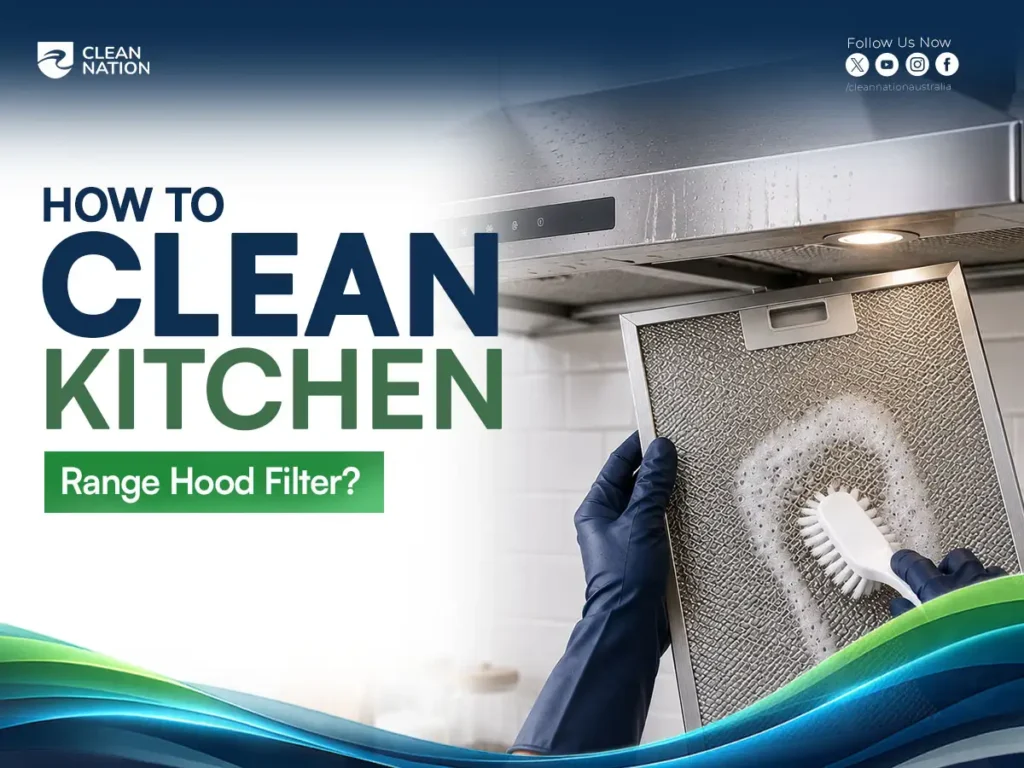
To learn how to clean a kitchen range hood filter properly, start by turning off the range hood and removing the filter from its clips or latches. Mix hot water with dish detergent, baking soda, and white vinegar to make a grease-cutting solution, then soak the filter for 10 to 15 minutes (longer for heavy grease). Scrub away loosened grease with a soft brush, focusing on stubborn spots, then rinse thoroughly and dry the filter completely before reinstalling it.
Clean mesh and baffle filters every 2 to 4 weeks, depending on how often you cook, and replace charcoal filters every 3 to 6 months since they can’t be washed. Regular cleaning keeps your range hood pulling smoke and grease out properly, cuts down on lingering cooking smells, and stops grease from building up on nearby cabinets and walls.
Why Should You Clean Your Kitchen Range Hood Filter?
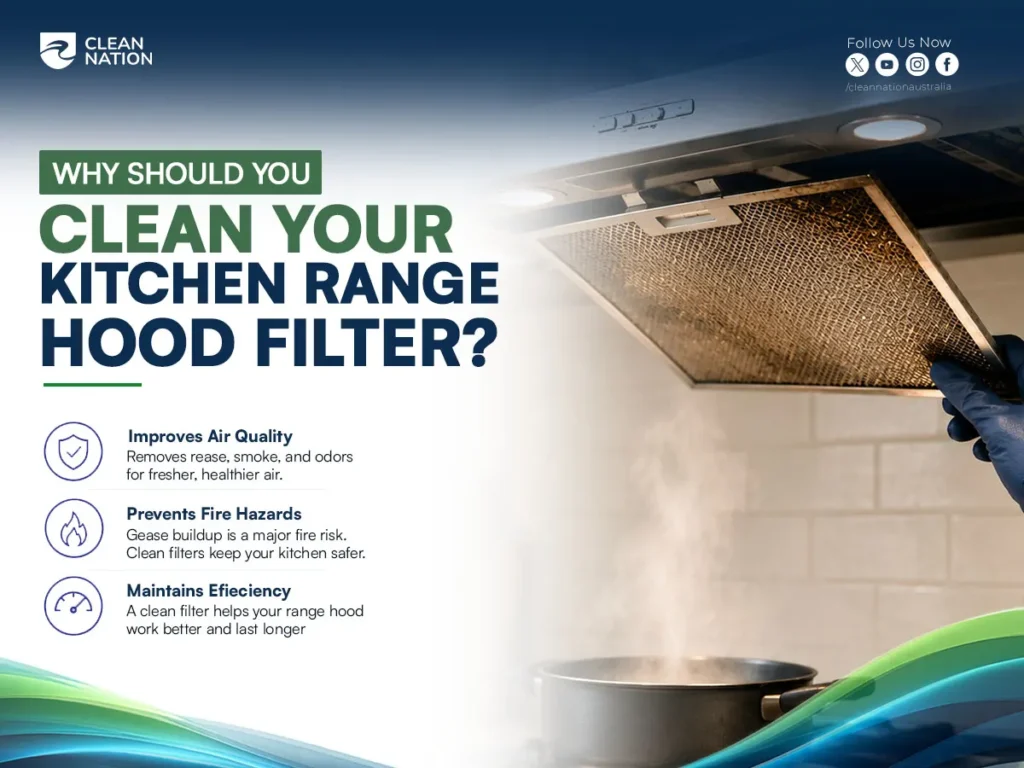
Every time you cook, grease particles float up into the air. Your range hood filter catches this grease buildup before it settles on your walls, cabinets, and ceiling. If grease has already reached your splashback or floor tiles, our guide on How to Clean Kitchen Tiles? covers how to remove it safely.
Over time, that trapped grease turns into a thick, sticky layer. If your kitchen needs more than a filter clean, a cleaning service in Australia can handle the deeper mess too.
Over time, that trapped grease turns into a thick, sticky layer. A dirty filter can’t do its job anymore. It stops trapping fat and starts blocking airflow instead.
This is why your kitchen smells long after you finish cooking. Fried food, spices, and smoke get trapped in the mesh. Without regular cleaning, those cooking smells linger in the air and soak into your curtains and furniture.
A clogged filter also hurts your kitchen air quality. Airborne grease particles stay in the room instead of getting pulled out. You end up breathing in more smoke and oil residue than you should.
Cleaning your filter regularly brings real benefits:
- Odour elimination – no more stale cooking smells hanging around your kitchen
- Better suction – a clean filter helps improve rangehood performance, so it pulls smoke and steam out faster
- Less mess – it helps reduce kitchen grease on your walls, cabinets, and stovetop
- Cleaner air – fewer airborne grease particles circulating through your home
Good kitchen hygiene starts with a clean filter. It’s one of the simplest habits for preventing grease build-up before it becomes a bigger, harder-to-remove problem.
Signs Your Range Hood Filter Needs Cleaning
Not sure if your filter needs attention? Here are the clearest signs your rangehood filter needs cleaning.
- Reduced rangehood suction – smoke and steam hang around longer than usual
- Yellowed mesh – filter discolouration is one of the first things you’ll notice
- Lingering cooking smells – smells stay in the kitchen long after you’ve finished cooking
- “Grease stains on cabinets – grease starts landing on surfaces instead of getting trapped. If you’re already noticing buildup, our guide on How Do I Clean Kitchen Cabinets? covers how to remove it safely.
- Rangehood not working properly – the fan runs, but it barely does anything
If you’re wondering “why is my range hood not removing smoke?”, the filter is usually the problem. Clogged rangehood filters block airflow, so the fan can’t pull smoke and steam out as it should.
Catch these signs early. A quick clean now is a lot easier than dealing with stubborn, baked-on grease later.
How Often Should You Clean a Range Hood Filter?

So how often should you clean a range hood filter? It depends on how much you cook.
Range hood filter cleaning frequency comes down to your cooking frequency. The more you cook, the more grease builds up.
- Heavy cooking (daily frying, grilling, or wok cooking) – clean weekly
- Moderate cooking (a few home-cooked meals a week) – monthly range hood cleaning works well
- Light cooking (occasional meals, less oil) – clean every 2 to 3 months
If you fry or grill often, weekly cleaning keeps grease from building up too fast. For most households, monthly is enough to keep the filter working well.
Whatever your cleaning frequency, don’t skip it for too long. Regular range hood maintenance keeps your filter working properly and your kitchen air cleaner.
Types of Kitchen Range Hood Filters
Not all filters work the same way. Range hood filter types depend on your rangehood’s filtration system and how it vents air.
Ducted rangehoods push air outside through a vent. Ductless rangehoods (also called recirculating rangehoods or venting rangehoods) filter the air and send it back into your kitchen.
Before buying a new filter, check filter compatibility with your model. Some rangehoods use universal filters, while others need a specific fit. So, what type of rangehood filter do I need? It depends on your rangehood model and how it vents.
Mesh Filters
Mesh filters are the most common type. They’re made from metal mesh filters, usually an aluminium mesh filter or layered fine metal mesh.
Are mesh rangehood filters washable? Yes. Most aluminium mesh grease filters are washable rangehood filters. You can clean them by hand or in the dishwasher.
Watch out for mesh damage over time. Warped mesh filters don’t seal properly and let grease pass through.
Stainless Steel Baffle Filters
Stainless steel baffle filters, also called baffle grease filters, use curved metal panels instead of mesh. They’re durable and easy to clean.
What is the difference between mesh and baffle filters? Baffle filters use solid panels to trap grease, while mesh filters use fine holes. Baffle filters are also grease-trapping filters, often used in busier kitchens.
How do you clean stainless steel rangehood filters? Soak them in hot, soapy water and scrub gently. Always clean with the grain direction to protect the stainless steel finish.
Charcoal Filters
Charcoal filters, or activated carbon filters, work differently. Instead of trapping grease, they absorb odours.
These are non-washable charcoal filters. Can you wash a charcoal rangehood filter? No. Washing damages the carbon and stops it from working.
Charcoal filter replacement is the only way to keep them effective. How often should charcoal filters be replaced? Usually every 3 to 6 months, depending on how often you cook.
Charcoal works through carbon absorption, pulling smells out of the air for real odour absorption. Since they’re disposable filters, just replace them once they stop absorbing odours well.
Cleaning Supplies You Need For Range Hood Filter

Before you start, gather a few basic rangehood cleaning supplies. Most of these are already in your kitchen.
- Dishwashing detergent or a grease-cutting detergent for the initial soak
- Baking soda to help break down stuck-on grease
- White vinegar for extra grease-cutting power
- Rubber cleaning gloves to protect your hands from hot water and grease
- Soft-bristled brush for scrubbing without scratching the filter
- Large pot big enough to fully submerge the filter
Want to skip store-bought cleaners? A simple homemade rangehood filter cleaner works just as well. Mix baking soda, white vinegar, and hot water with a grease-cutting detergent. This combination breaks down grease without harsh chemicals.
With these supplies ready, you’re set to move on to the actual cleaning steps.
Step-by-Step Guide: How to Clean Kitchen Range Hood Filter
This step-by-step guide to cleaning a rangehood filter walks you through the full degreasing process. Follow these steps to deep clean the rangehood filter and get rid of stuck-on grease.
This rangehood filter cleaning method works for most mesh and baffle filters. It uses passive cleaning (soaking) combined with light scrubbing to break down grease without damaging the filter. Done right, it can fully restore filter performance.
Step 1: Turn Off the Range Hood and Remove the Filter
Start with kitchen safety in mind. Switch off appliance power at the wall before touching anything.
Turn off power and let the surface cool down if you’ve just finished cooking. This is basic electrical safety and avoids burns from hot metal.
Once it’s safe, begin filter removal. Most filters click out using filter clips or filter latches. Gently press or slide these to release the filter.
Step 2: Prepare a Cleaning Solution
Next, make your cleaning solution. A simple homemade degreaser works well and costs almost nothing.
Mix hot water with a detergent solution, then add sodium bicarbonate (baking soda) and a splash of acetic acid (white vinegar). This combination makes a baking soda and vinegar cleaner that acts as a natural grease remover.
For extra grease-cutting power, use a hot detergent solution with a grease-cutting dish soap. It’s a fully eco-friendly cleaning solution with no harsh chemicals.
Step 3: Soak the Filter in Hot Water
Now it’s time to soak the filter in your cleaning mix. This hot water treatment loosens grease before you scrub.
Fill your kitchen sink or a large pot and fully submerge the filter in the solution. Hot water helps penetrate grease and loosen residue stuck deep in the mesh or baffles.
How long should you soak a rangehood filter? Let it sit for 10 to 15 minutes. For heavy grease, extend the hot water soak to 20 to 30 minutes. This boiling water cleaning method does most of the hard work for you.
Step 4: Scrub Away Grease and Dirt
After soaking, it’s time to scrub the filter. This step helps remove stubborn grease that the soak alone couldn’t shift.
Use soft brush cleaning for gentle scrubbing across the whole filter. A dish brush works well for larger areas, while a toothbrush is handy for tight corners and mesh gaps.
Focus on spots with stubborn grime or baked-on residue. This step helps break down grease build-up without scratching the surface.
Step 5: Rinse and Dry the Filter
Once scrubbed, rinse the filter thoroughly under warm running water. Make sure no soap or grease residue remains.
Then dry the filter completely before putting it back. Air drying works best, or use a damp cloth to wipe to speed things up.
This step matters for moisture removal. Drying the filter fully helps prevent rust and corrosion. It also supports moisture prevention and mould prevention, keeping the filter safe to use.
Step 6: Reinstall the Filter
Finally, reinstall the filter back into your rangehood. Properly secure filter installation keeps it working correctly and prevents rattling.
Slide the filter back along its sliding rails and check filter alignment before locking it in with the filter latches.
Do a quick filter inspection once it’s in place. If you hear a rattling noise, the filter isn’t sitting properly in its filter sockets. Adjust it until it sits flat and secure. That confirms proper installation and means you’re done.
Common Mistakes to Avoid When Cleaning Range Hood Filters
Cleaning your filter the wrong way can do more harm than good. Here are the mistakes to watch out for.
- Using bleach or ammonia-based cleaners – these chemicals can react badly with metal and leave harmful fumes behind
- Scrubbing with steel wool or abrasive scourers – these cause surface scratches and wear down the filter’s coating
- Skipping the soak step – scrubbing dry, caked-on grease straight away leads to mesh damage
- Using extreme force – bending or twisting a filter to remove grease often results in damaged rangehood filters
To keep your filter in good shape, always avoid harsh chemicals and stick to mild detergents instead. This helps prevent tarnishing on stainless steel and keeps mesh filters intact for longer.
A gentle approach takes a bit more time, but it protects your filter and helps it last through many more cleans.
How to Maintain Your Range Hood Filter (Between Deep Cleans)
You don’t need a full deep clean every time. A simple rangehood maintenance routine keeps grease from piling up between cleans.
- Wipe down after cooking – quick damp cloth wiping removes fresh grease before it hardens
- Cover pans while cooking – covering pans helps reduce oil splatter that lands on the filter
- Run the fan every time you cook – keep your run rangehood fan habit consistent, even for quick meals
- Let it run a bit longer – post-cooking ventilation for 5 to 10 minutes clears leftover smoke and grease from the air
Stick to a simple filter maintenance schedule. Wipe weekly, deep clean monthly. This kind of regular maintenance makes each deep clean faster and easier.
Building a steady filter cleaning routine means less scrubbing overall. Small habits between deep cleans go a long way. Want to see the process in action? Check out this quick kitchen cleaning video for a visual walkthrough.
Why Choose Clean Nation for Range Hood Filter Cleaning?
Not everyone has the time or patience for scrubbing grease off a filter every month. That’s where Clean Nation comes in.
Clean Nation range hood filter cleaning takes the hassle out of the job. Our team handles the soaking, scrubbing, and drying, so you don’t have to.
Here’s what you get with our professional range hood cleaning:
- Appliance cleaning specialists who know how to handle mesh, baffle, and charcoal filters without damaging them
- Professional cleaning solutions that cut through grease without harsh chemicals
- Deep kitchen cleaning that goes beyond just the filter, covering the whole rangehood
- Flexible scheduling that fits around your cooking habits
As part of our broader kitchen cleaning services in Australia, we make sure your kitchen stays fresh and your rangehood works the way it should. If you’re based in the city, check out our kitchen cleaning service in Sydney for local booking options.
Want to see our team at work? Watch this professional kitchen cleaning short for a behind-the-scenes look.
Tired of scrubbing grease yourself? Book a regular cleaning service with Clean Nation and let us handle it for you.
Client Experience With Clean Nation
The Problem
A busy home cook in Parramatta reached out to Clean Nation after noticing weak suction and a constant greasy smell in her kitchen. She cooked almost every day, mostly frying and stir-fries, and hadn’t cleaned her rangehood filter in over six months. As one of our regular clients across kitchen cleaning services in New South Wales, she reached out for a full deep clean.
The mesh filter was yellowed and clogged. Grease had started building up on the cabinets above the stove.
What Clean Nation Did
Our team inspected the filter and found heavy grease build-up blocking most of the mesh. Instead of a quick wipe-down, we ran a full deep clean:
- Removed and soaked the filter in a hot degreasing solution
- Scrubbed out baked-on grease from the mesh layers
- Rinsed, dried, and reinstalled the filter correctly
- Wiped down the surrounding cabinet surfaces to remove grease residue
The whole job took under an hour.
The Result
Suction improved right away. Smoke and steam cleared from the kitchen much faster during cooking. The lingering smell she’d gotten used to was gone within a day.
She’s now on a monthly cleaning schedule with Clean Nation, so grease never gets the chance to build back up.
Why It Matters
This is a common story. Most homeowners don’t notice how much a dirty filter is holding their kitchen back until it’s cleaned. A single deep clean can restore airflow, cut down on smells, and protect your kitchen surfaces from grease damage.
If your rangehood filter hasn’t been cleaned in a while, book a service with Clean Nation and see the difference for yourself.
FAQs
Is it safe to clean a range hood filter in the dishwasher?
Yes, for most stainless steel and aluminium mesh filters. Check your rangehood’s manual first, since some coatings or finishes can be affected by dishwasher heat and detergent. Charcoal filters should never go in the dishwasher.
Why does my range hood filter still smell after cleaning?
A lingering smell usually means some grease is still trapped deep in the mesh or baffles. Soak it again for a longer period, and make sure it’s fully dry before reinstalling, since trapped moisture can also cause odours.
Can a dirty range hood filter be a fire hazard?
Yes. Grease build-up is flammable, and a clogged filter that traps heat near the stove increases fire risk. Regular cleaning removes this buildup and keeps your kitchen safer.
Does cleaning the filter save on energy costs?
Yes. A clean filter lets your rangehood fan run efficiently instead of working harder to pull air through blocked mesh. This puts less strain on the motor and can extend its lifespan.
Is it better to clean the filter myself or hire a professional?
DIY cleaning works fine for regular upkeep if you have the time and supplies. A professional service is worth it for deep cleans, stubborn grease, or if you’d rather skip the hassle altogether.
Conclusion
Keeping your range hood filter clean isn’t complicated, but it does need consistency. A few simple range hood filter care tips, like wiping after cooking and deep cleaning monthly, go a long way.
Good filter maintenance keeps your kitchen ventilation working the way it should. It clears smoke faster, cuts down on lingering smells, and protects your cabinets from grease stains.
A regular cleaning routine also supports better kitchen hygiene overall. Clean filters mean cleaner air and a healthier kitchen environment for you and your family.
If scrubbing grease isn’t how you want to spend your weekend, Clean Nation can help. Our team keeps your rangehood running at optimal performance, so you get better suction and a fresher kitchen without the hassle.
Ready to improve rangehood performance? Book a cleaning with Clean Nation today, or read our client reviews to see what other homeowners are saying.