


How to Disinfect Kitchen Surfaces: Start by cleaning them first to remove dirt and grease, then apply an EPA-registered disinfectant and let it sit for the full contact time listed on the label, usually between 30 seconds and 10 minutes, before wiping or rinsing as needed. Disinfect after handling raw meat, poultry, or seafood, after spills, or when someone in the house is sick, and focus daily attention on high-touch spots like fridge handles, faucets, and countertops. Skipping the cleaning step or cutting the contact time short are the two mistakes that leave germs behind, so getting the process right is what actually makes a kitchen safe to cook in.
Cleaning and Disinfecting Are Not the Same Thing
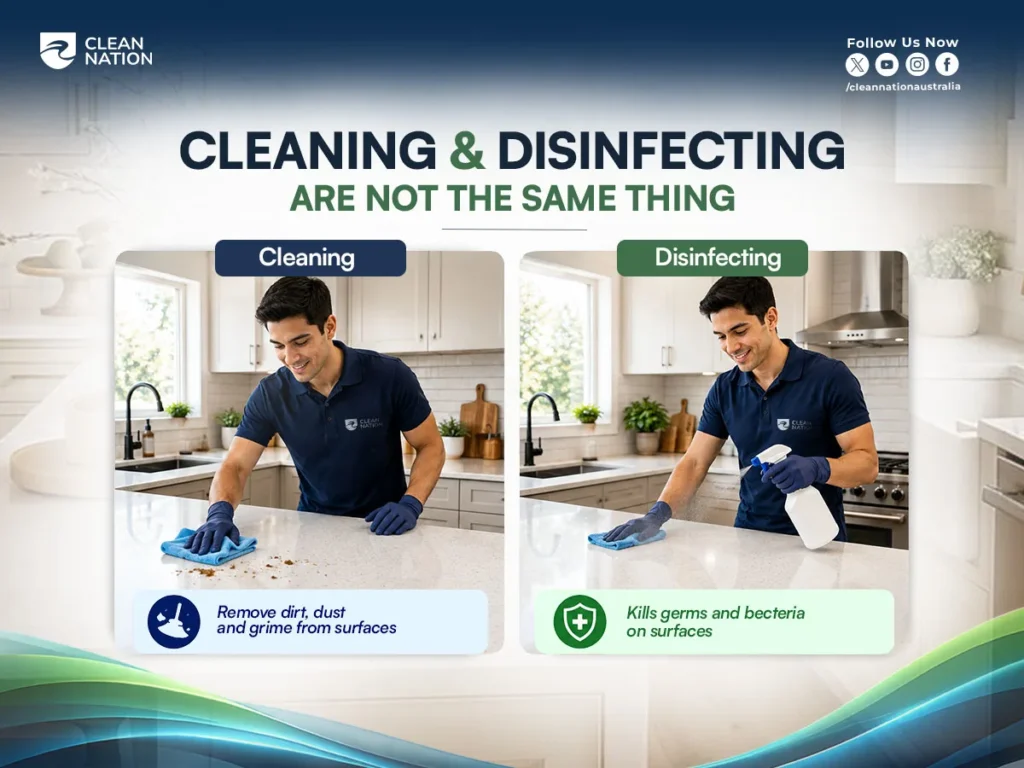
A lot of people think wiping down a counter is enough. It’s not. Cleaning removes dirt, grease, and food particles you can see. Disinfecting kills the bacteria and viruses you can’t see, like Salmonella, E. coli, and norovirus.
Here’s the part most people miss: you have to clean before you disinfect. If you spray disinfectant straight onto a dirty surface, the grime blocks it from reaching the germs underneath. If your kitchen needs more than a quick fix, a professional cleaning service in Australia can handle the deep clean before you take over the day-to-day disinfecting routine.
Think of it as two separate jobs:
- Cleaning removes visible mess with soap, water, and a bit of scrubbing.
- Disinfecting uses a chemical product to reduce bacteria and viruses to a safe level.
Skipping the cleaning step is one of the most common reasons a “disinfected” kitchen still isn’t safe. Food particles and grease can trap bacteria, and no amount of spray will fix that if the surface underneath is still dirty. There are real health benefits of cleaning the kitchen that go beyond disinfecting alone, from lower bacteria counts to a safer space for your family.
This two-step process matters most on high-touch, food-contact surfaces: countertops, cutting boards, fridge handles, and sinks. These are the spots where raw food, hands, and utensils meet most often, so they carry the highest risk of spreading illness-causing bacteria.
Get this order right, and everything else in this guide works the way it’s supposed to.
When Do You Actually Need to Disinfect?
Not every kitchen task needs a full disinfection. Wiping up crumbs after breakfast is cleaning. Some situations call for disinfecting too.
Disinfect your kitchen surfaces:
- After handling raw meat, poultry, or seafood. These foods carry bacteria like Salmonella that can spread to anything they touch.
- When someone in your home is sick. Cold and flu viruses, including norovirus, can survive on surfaces for hours.
- After a spill of raw ingredients. Even a small splash from raw eggs or meat juice needs more than a wipe.
- During cold and flu season. Regular disinfecting of high-touch spots cuts down on how far germs spread.
Outside of these moments, a good clean with soap and water is usually enough. Disinfecting every surface every day isn’t necessary and can wear down materials faster than they need to.
The goal is to disinfect when there’s a real risk of harmful bacteria or viruses, not just because a surface looks used.
What You’ll Need Before You Start
Before you disinfect anything, gather your supplies. Having everything ready means you won’t cut a step short halfway through.
Basic supplies:
- Disinfectant spray or wipes (look for EPA-registered products)
- Clean cloths or paper towels
- Gloves, especially if you’re using bleach or strong chemicals
- Warm water and a mild detergent for the cleaning step
A note on natural cleaners: Vinegar, baking soda, and tea tree oil are popular for cleaning, but they’re not reliable disinfectants. They may cut grease and remove odors, but they don’t reliably kill bacteria like Salmonella or viruses like norovirus. If you want an actual disinfecting effect, use a product labeled as a disinfectant, not just a cleaner.
If gathering the right products feels like a hassle, most kitchen cleaning services in Australia bring their own commercial-grade supplies, so this step is one less thing to worry about.
Check the label on any disinfectant before you buy it. It should list what it kills and how long it needs to sit on a surface to work.
Safety Tips While Disinfecting the Kitchen
Disinfectants are chemicals, and chemicals need to be handled carefully, especially in a kitchen where you prepare food.
Keep these safety rules in mind:
- Never mix cleaning products. Combining bleach with ammonia or other chemicals can create toxic gas. Always use one product at a time.
- Open a window or turn on the fan. Good ventilation matters, especially with bleach or strong sprays.
- Wear gloves. This protects your skin from irritation, particularly with bleach-based products.
- Read the label every time. Instructions vary by product, and using the wrong amount can make a disinfectant less effective or unsafe.
- Rinse food-contact surfaces if the label says to. Some disinfectants need to be rinsed off before you prepare food again. Others are safe to air dry. Check first.
- Keep kids and pets away while you work. Let the surface dry fully before they’re back in the kitchen.
These steps take a few extra minutes, but they keep both you and your food safe.
How to Disinfect a Kitchen Surface, Step by Step
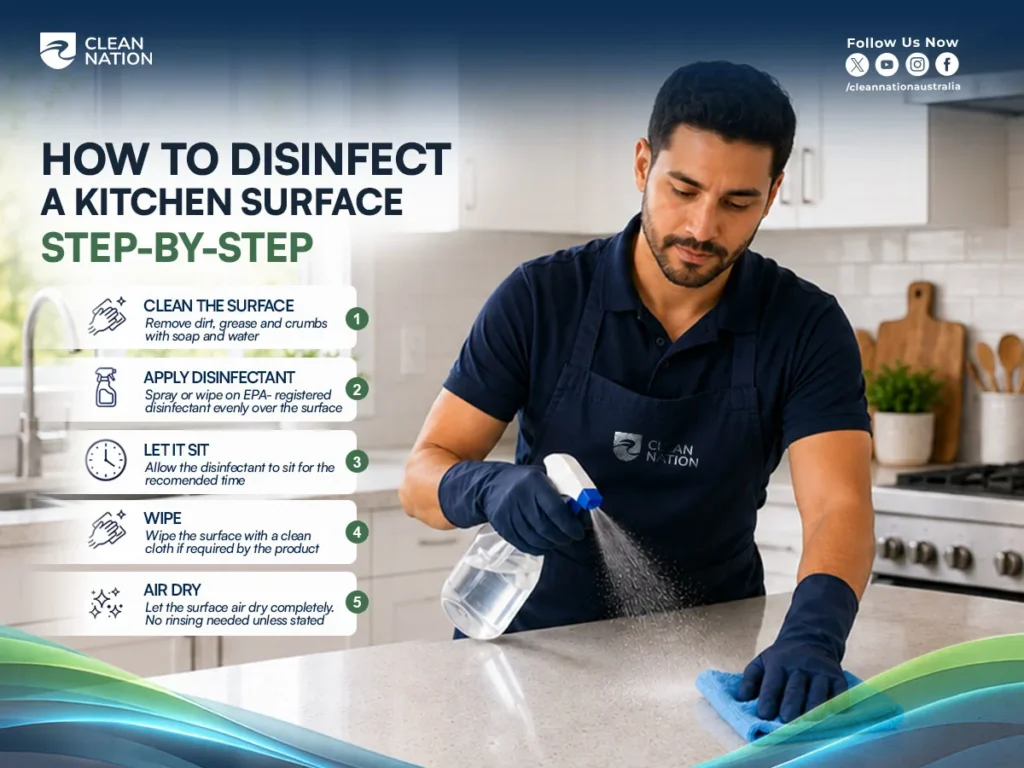
Once you’ve got your supplies and you know the safety basics, here’s the process from start to finish.
Step 1: Clear the Surface
Remove dishes, food, and clutter so you can reach every inch. You can’t disinfect what you can’t get to.
Step 2: Clean First
Wipe away visible dirt, crumbs, and grease with soap and water. This step is not optional. Disinfectant can’t work through a layer of grime.
Step 3: Apply the Disinfectant
Spray or wipe it evenly across the surface. Make sure you cover the whole area, including edges and corners.
Step 4: Let It Sit
This is called contact time or dwell time. Most products need 30 seconds to 10 minutes to actually work. Check the label for the exact time. This is the step most people rush, and it’s the one that matters most.
Step 5: Wipe or Rinse if Needed
Some products require a rinse on food-contact surfaces. Others don’t. Follow the label instructions for your specific product.
Step 6: Let It Air Dry
Avoid wiping it dry with a cloth unless the label tells you to. Wiping too soon can cut the contact time short and reduce how well the disinfectant works.
Skipping Step 4 is the most common shortcut people take, and it’s the one that matters most. A disinfectant that’s wiped off too soon hasn’t had time to kill anything. If you’d rather watch the process than read it, this short kitchen cleaning video walks through the same steps in real time.
Common Mistakes People Make When Disinfecting the Kitchen
Even with good intentions, small habits can undo all your work. Here’s what to watch for.
- Skipping the cleaning step. Spraying disinfectant on a dirty surface leaves grease and food particles blocking the product from doing its job.
- Not waiting long enough. Wiping off disinfectant before the contact time is up means bacteria and viruses survive.
- Reusing a dirty cloth. Wiping multiple surfaces with the same cloth spreads germs instead of removing them.
- Ignoring sponges and dish towels. These hold onto bacteria longer than almost anything else in the kitchen. Replace sponges often and wash dish towels in hot water.
- Forgetting cutting boards. Grooves from knife cuts trap bacteria that a quick wipe won’t reach. Scrub them, and consider a bleach soak for wooden or plastic boards.
- Missing high-touch spots. Fridge handles, cabinet pulls, and faucet handles get touched constantly but often get skipped.
Fixing these habits doesn’t take extra time. It just means doing the steps you’re already doing, but doing them right.
How Often Should You Really Be Doing This?
Disinfecting frequency depends on what you’re cleaning and how it’s used.
Daily:
- High-touch surfaces: fridge handles, cabinet pulls, faucet handles
- Countertops used for food prep
After every use:
- Cutting boards and utensils used for raw meat, poultry, or seafood
- Any surface touched by raw egg
Weekly:
- A full disinfection of the whole kitchen, including surfaces that don’t see daily use
As needed:
- Any time there’s a spill from raw food
- Any time someone in the house is sick
You don’t need to disinfect everything every day. Overdoing it wastes product and can wear down some surfaces over time. Match the frequency to the actual risk.
Why People Choose Clean Nation
Not every kitchen job needs a professional, but some do. Deep buildup, mould, or move-in cleans go beyond what a home routine can fix.
Clean Nation handles this with trained staff who know which products work on which surfaces, and how long each one needs to sit to actually kill bacteria and viruses. That matters more than it sounds. Using the wrong product, or the right product for too short a time, leaves a kitchen looking clean while germs are still there.
Every job follows the same clean-first, disinfect-second process covered in this guide, just done at a deeper level with commercial-grade products. If you’re based in Sydney, our kitchen cleaning service in Sydney team covers everything from routine disinfecting to full deep cleans. We also cover kitchen cleaning services in New South Wales more broadly, for homes and businesses outside the city.
You can see this professional kitchen cleaning process in action, or read what past customers have said in our client reviews. Clean Nation is insured, so you’re covered if anything goes wrong during a job.
If your kitchen needs more than a weekend of scrubbing, that’s when it’s worth calling in help instead of guessing.
Case Study: Getting a Sydney Café Back Up to Standard
A café in Sydney’s inner west called Clean Nation after a routine health inspection flagged buildup on their kitchen surfaces and equipment. The owner had a cleaning routine in place, but grease and food residue had built up in spots that daily wiping never reached: behind appliances, in cutting board grooves, and along the edges of countertops.
The problem:
- Grease buildup on food-contact surfaces
- Cutting boards with visible knife-groove staining
- Risk of failing a follow-up inspection within two weeks
What Clean Nation did:
- Assessed the kitchen and identified every high-risk surface, not just the ones the inspector flagged
- Deep cleaned all food-contact surfaces, removing built-up grease before applying any disinfectant
- Disinfected every surface with the correct contact time for each product used
- Gave the owner a simple daily and weekly cleaning schedule to prevent the same buildup from happening again
The result: The café passed its follow-up inspection with no issues. The owner kept the team on a light monthly maintenance clean to catch buildup early, before it became a problem again.
This is the kind of job that shows the difference between a quick wipe-down and an actual clean-first, disinfect-second process. Buildup doesn’t happen overnight, and it usually doesn’t show up during a normal shift. It takes a proper deep clean to catch it before it turns into a compliance issue.
FAQs
Can I use vinegar or baking soda as a disinfectant?
No. Vinegar and baking soda can clean and cut grease, but they don’t reliably kill bacteria or viruses. Use an EPA-registered disinfectant if you need to kill germs, not just remove dirt.
How long should disinfectant sit on a surface?
It depends on the product. Most need between 30 seconds and 10 minutes. Check the label for the exact contact time and don’t wipe it off early.
Is it safe to disinfect wooden cutting boards?
Yes, but wood is porous, so grooves from knife cuts can trap bacteria. Scrub the surface well and consider a diluted bleach soak occasionally for a deeper clean.
Do I need to rinse after disinfecting?
Sometimes. On food-contact surfaces, some products need a rinse before you prepare food again. Check the label since this varies by product.
What’s the difference between disinfecting and sterilising?
Disinfecting reduces bacteria and viruses to a safe level. Sterilising removes nearly all microorganisms and is typically used for medical or lab equipment, not home kitchens.
Conclusion
Clean first, disinfect second. That one rule fixes most of the mistakes people make in their kitchen.
Match your disinfecting habits to actual risk: daily for high-touch spots, after every use for raw food surfaces, and weekly for a full kitchen reset. Read the label on whatever product you’re using, and give it the time it needs to work.
If the job gets bigger than a weekend clean, Clean Nation is there to handle it properly.
Ready for a kitchen that actually passes inspection? Get in touch with Clean Nation today for a deep clean and disinfection you won’t have to think twice about.