



The construction work is nearly finished, the handover date is approaching, and the property looks ready. But one poorly timed final clean can create unnecessary delays, additional cleaning costs, and last-minute problems before the client walkthrough.
For builders across Australia, scheduling a final builders clean involves more than choosing an available date. It requires coordination with finishing trades, realistic cleaning time, clear scope requirements, and room for unexpected touch-ups.
Understanding the common scheduling mistakes can help builders avoid repeated cleaning work and keep their projects on track for handover.
Why Proper Final Builders Clean Scheduling Matters
A final builders clean prepares a newly built or renovated property for inspection and handover by removing construction dust, paint marks, adhesive residue, and other traces of building work.
However, even a thorough clean can lose its value when scheduled at the wrong stage. If painters, electricians, or other trades return afterwards, previously cleaned surfaces may become dirty again.
Late bookings create different problems. Cleaning contractors may have limited availability, particularly when several construction projects are approaching completion.
A well-planned cleaning schedule helps builders coordinate finishing work, control unnecessary costs, and present the completed property in suitable condition for the client’s final walkthrough.
9 Common Final Builders Clean Scheduling Mistakes Builders Should Avoid
1. Booking the Final Clean Before All Trades Have Finished
One of the most common mistakes is arranging a final clean while construction work is still taking place.
Painters may be completing touch-ups, electricians installing fittings, or cabinetmakers making adjustments. These activities can leave dust, packaging, fingerprints, and marks on freshly cleaned surfaces.
The result is often additional cleaning work before handover.
How to avoid it: Confirm the expected completion of all major trades with the site supervisor before locking in the cleaning date. Schedule the detailed clean after dust-producing work and finishing installations are complete.
If further work is unavoidable, identify the affected areas and arrange a separate touch-up clean where necessary.
2. Leaving the Builders Clean Booking Until the Last Minute
Some builders focus on construction deadlines and only arrange cleaning once the property is almost ready for handover.
This can limit contractor availability and leave insufficient time for detailed work.
A large residential development, custom home, or commercial fit-out may require more than a single cleaning visit. Waiting until the final days can make it difficult to organise the crew and equipment needed.
How to avoid it: Contact a cleaning provider once the anticipated handover period becomes reasonably clear.
Builders can discuss project requirements and provisional dates through Clean Nation’s construction and builders cleaning services before confirming the final schedule.
The important distinction is to arrange the booking early without performing the detailed clean prematurely.

3. Treating Rough Cleaning and Final Cleaning as One Job
A construction site accumulates different types of waste and residue throughout the building process.
Trying to remove heavy debris, plaster dust, protective materials, paint marks, and finishing residue in one last-minute cleaning visit can increase the workload considerably.
It may also leave insufficient time for the detailed presentation work expected before inspection.
How to avoid it: Plan the cleaning work in appropriate stages:
- Rough clean: Removes loose construction waste and heavy debris during the building process.
- Detailed builders clean: Addresses dust and residue once major construction work is finished.
- Final presentation clean: Refreshes visible surfaces, glass, fixtures, and floors shortly before handover.
Not every project requires three separate visits. The appropriate stages depend on the property, site condition, and agreed scope.
4. Underestimating How Long the Final Clean Will Take
A property can look almost finished while still requiring substantial cleaning.
Fine plaster dust can accumulate inside cabinetry, along skirting boards, and in window tracks. Paint splashes, grout haze, and adhesive residue can also require careful attention.
Builders who estimate cleaning time from floor area alone may overlook these details.
A newly completed apartment and a large custom home will not necessarily require the same cleaning resources.
How to avoid it: Provide the cleaning contractor with accurate property details, including floor area, number of rooms, glazing, surface finishes, and visible construction residue.
Where possible, arrange a site assessment or share recent photographs before confirming the cleaning duration.
This allows the proposed schedule to reflect the actual work rather than an assumption about how quickly the property can be cleaned.
5. Failing to Confirm the Builder’s Cleaning Scope
The term “final clean” does not always mean the same thing to every builder or cleaning contractor.
One quote may cover internal surfaces, floors, bathrooms, and accessible glass. Another may include external areas, extensive adhesive removal, waste disposal, or specialist surface cleaning.
If expectations are not agreed before the booking, important tasks may be left outside the scheduled work.
How to avoid it: Request a written cleaning scope that identifies the areas and tasks included.
Confirm whether window cleaning, cabinetry interiors, floor detailing, balconies, external surfaces, and removal of remaining materials are required.
Also identify sensitive finishes such as natural stone, polished concrete, timber flooring, and specialty glass so suitable cleaning methods can be assessed.
Clear scope requirements help contractors allocate appropriate time and reduce unexpected additional charges.
6. Ignoring Site Access and Cleaning Readiness
Even when construction work is complete, a site may not be ready for the cleaning team.
Locked rooms, unavailable electricity, restricted water access, stored building materials, or incomplete floor protection removal can interrupt the planned cleaning work.
A contractor may arrive on schedule but be unable to complete certain areas.
How to avoid it: Check the site’s cleaning readiness before the appointment.
Confirm that safe access is available, required utilities are operational, loose materials have been cleared, and the relevant rooms can be entered.
Ensure freshly painted surfaces, sealants, and other finishes have reached the condition specified by their manufacturers before cleaning begins.
The site supervisor should also identify any restricted areas or safety requirements that could affect the work.
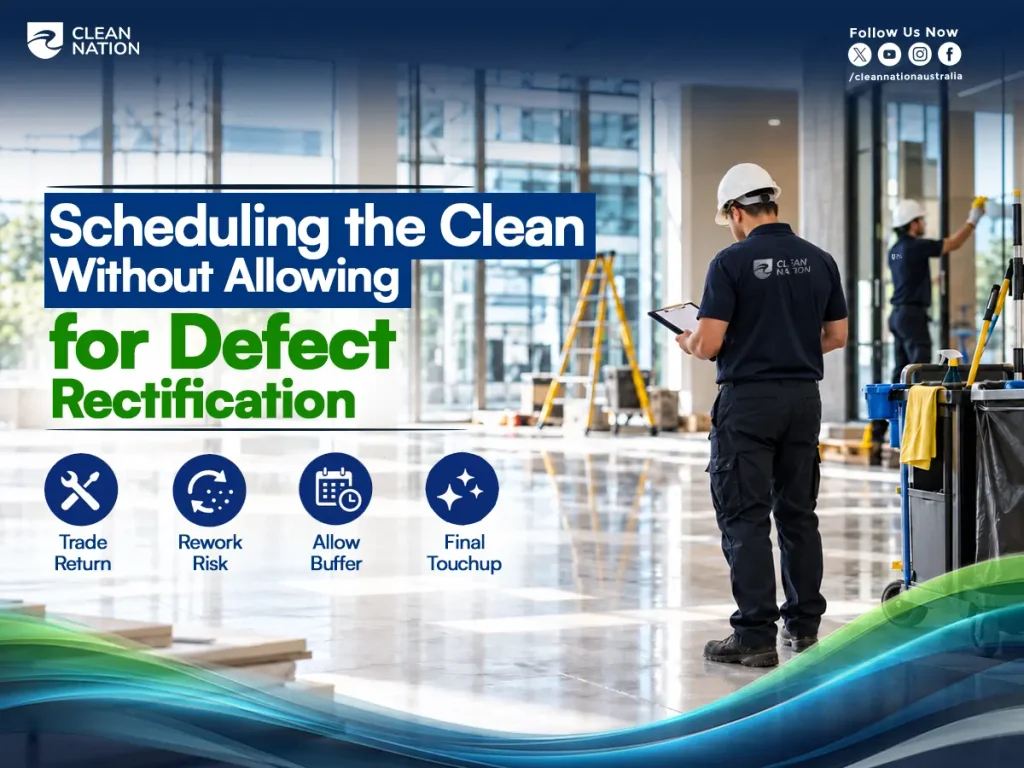
7. Scheduling the Clean Without Allowing for Defect Rectification
A project may appear ready for handover until the final inspection identifies minor defects.
Trades may need to return to adjust cabinetry, repair paintwork, replace fittings, or address other outstanding items.
When this happens after a detailed clean, dust and marks can reappear.
If there is no time remaining before handover, the builder may face a difficult choice between arranging urgent cleaning and presenting an unfinished-looking property.
How to avoid it: Include a realistic defect rectification period in the construction programme.
Where appropriate, complete the main builder’s clean before the final defect review, allow trades to carry out necessary corrections, and arrange a light presentation clean afterwards.
Agree beforehand whether cleaning after defect work is included in the original quote or requires a separate booking.
8. Using the Same Cleaning Schedule for Every Construction Project
Not every property can follow the same final cleaning timeline.
A single newly built house may be cleaned as one project, while a multi-unit development may have different completion dates for individual apartments.
Commercial projects introduce further considerations, including shared access areas, staged fit-outs, building management requirements, and separate tenant handover dates.
Applying one fixed cleaning day to an entire development can mean some areas are cleaned too early while others are not yet ready.
How to avoid it: Match the cleaning schedule to the project’s size, access arrangements, and completion stages.
For example, builders managing apartment developments in Sydney may benefit from scheduling cleaning floor by floor or unit by unit as trades complete their work.
Clean Nation also provides post-construction cleaning in New South Wales for residential and commercial properties, allowing project requirements to be discussed according to the work involved.
9. Skipping the Final Cleaning Inspection and Sign-Off
Some builders consider the cleaning job complete as soon as the cleaning team leaves.
However, areas such as window tracks, cabinetry interiors, skirting boards, mirrors, and door frames may need additional attention.
Discovering these issues during the client’s walkthrough can create avoidable last-minute pressure.
Without a documented review, it can also be difficult to establish whether an issue was missed during cleaning or caused by later site activity.
How to avoid it: Arrange a final walkthrough with the responsible site contact once the agreed cleaning work is complete.
Inspect the cleaned areas against the scope and record any outstanding cleaning items.
Photographs and a simple sign-off record can help establish the property’s condition before any subsequent trade visits.
How to Schedule a Final Builders Clean Before Handover
Avoiding common mistakes becomes easier when the final clean is treated as part of the construction programme rather than an isolated appointment.
The following is an illustrative scheduling approach for a residential building project. Actual dates should be adjusted to suit the scope, remaining trades, and contractor availability.
| Project stage | Recommended action |
| Early handover planning | Contact the cleaning contractor and provide project details |
| Before final trade completion | Review site readiness and confirm a provisional cleaning date |
| After major trades finish | Complete the agreed detailed builders clean |
| During the defect review period | Rectify outstanding construction items and identify affected cleaned areas |
| Shortly before handover | Complete any agreed presentation touch-ups and final cleaning inspection |
For larger commercial developments, cleaning may need to be divided into separate zones or completed across multiple visits.
Builders should also update the cleaning contractor promptly when trade completion dates change. Early communication makes it easier to adjust staffing, site access, and the planned cleaning sequence.

Final Builders Clean Checklist Before Confirming Your Booking
Before confirming the cleaning appointment, use this checklist to identify potential scheduling problems.
- Major construction and dust-producing work is complete.
- Outstanding trades and defect repairs have been identified.
- Construction waste and equipment have been cleared from relevant areas.
- Required electricity, water, lighting, and access are available.
- Cleaning scope, surface finishes, and specialist requirements are confirmed.
- The contractor has received accurate site details and current photographs.
- Cleaning duration and the expected handover date are coordinated.
- Responsibility for subsequent touch-up cleaning is agreed.
- A final walkthrough and sign-off arrangement are in place.
Completing these checks helps builders identify readiness issues before they become scheduling problems.
Frequently Asked Questions
1. Can a final builder’s clean be scheduled on a weekend?
Yes, weekend cleaning may be possible depending on contractor availability, site access, and building restrictions. Confirm any additional weekend charges and ensure the property can be accessed safely outside normal working hours.
2. What should builders do if the handover date changes after booking?
Notify the cleaning contractor as soon as the revised programme is known. Ask about alternative dates, crew availability, and any rescheduling conditions under the agreed booking terms.
3. Can final cleaning take place while the property is still awaiting an occupancy certificate?
Cleaning may be possible before certification, depending on the site’s safety, access conditions, applicable requirements, and the work permitted at that stage. Cleaning completion does not replace statutory inspections or occupancy approval.
4. Who is responsible for additional cleaning if trades make a mess after the final clean?
Responsibility depends on the construction contract and cleaning agreement. Builders should clarify whether subsequent cleaning is charged separately and how costs related to returning trades will be handled.
5. Can builders request an urgent final clean for a delayed project?
Some contractors may accommodate urgent bookings when crews are available. However, short notice can limit available time and resources, particularly for larger properties. Providing photographs, site details, and a clear scope can help the contractor assess the request.
Plan Your Final Builders Clean with Clean Nation
A successful project handover depends on more than completing the building work. The property also needs to be properly prepared for its final presentation.
Scheduling cleaning after major trades, confirming the scope, allowing time for defect rectification, and arranging a final inspection can help reduce unnecessary rework and avoidable delays.
At Clean Nation, we provide construction and builders cleaning services for residential and commercial properties across Australia, including Sydney and surrounding areas.
Need to arrange a final builders clean? Contact Clean Nation on +61 480 810 142 or request a quote with your project details, expected completion date, and cleaning requirements.