

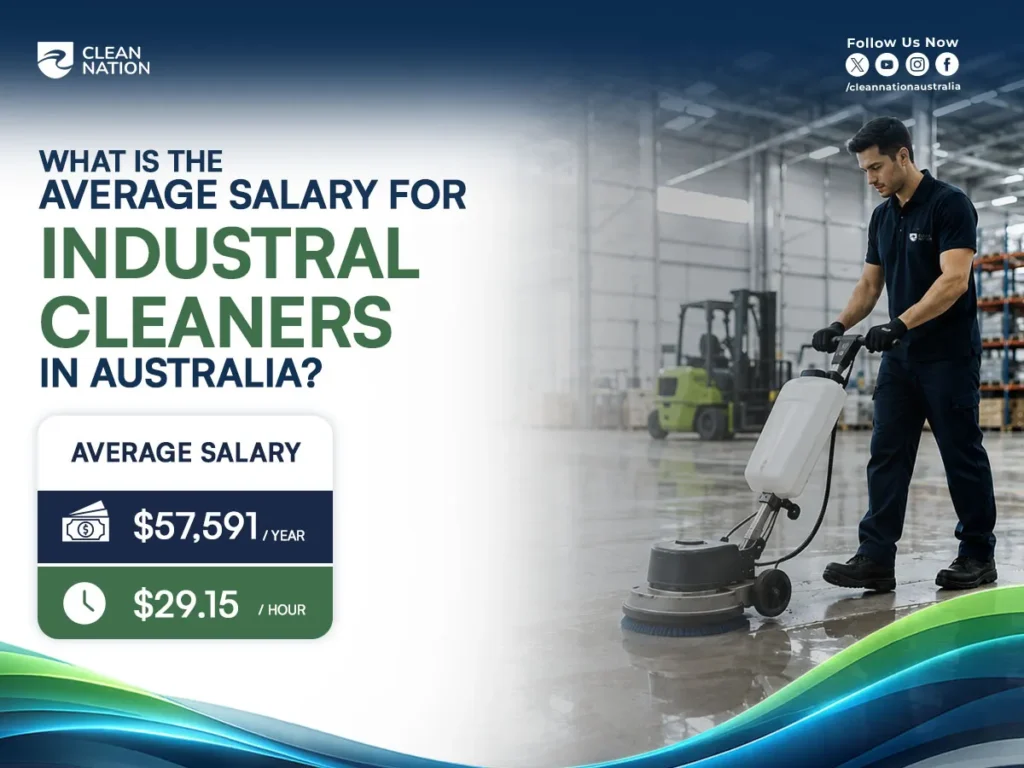
The average salary for Industrial Cleaners in Australia sits around $57,591 per year. Depending on experience, location, and the type of site you work on, salaries typically range from $50,000 to $75,000.
Most industrial cleaners earn a gross salary with occasional bonuses tied to shift work or specialised tasks. If you’re comparing pay across the cleaning service in Australia industry, industrial roles tend to sit near the top. Here’s a quick breakdown:
| Metric | Amount |
| Average annual salary | $57,591 |
| Salary range | $50K – $75K |
| Average hourly rate | $29.15 |
| Total compensation (with bonus) | $58,260 |
Your actual pay depends a lot on the site you’re cleaning, whether it’s a factory floor or a mine site, and how much specialised training you bring.
Industrial Cleaner Salary by Experience Level
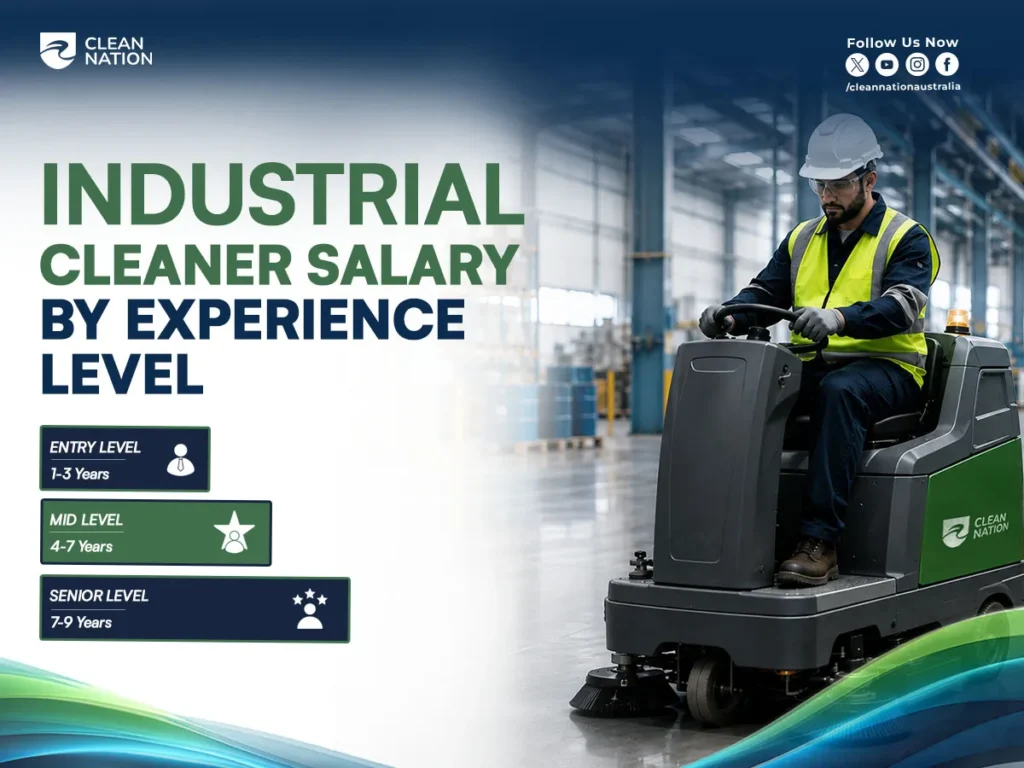
Experience makes a real difference in what you take home. As industrial cleaners build skills and take on more responsibility, their earning potential grows steadily.
On average, salaries increase by about 5.4% per year as workers move from entry-level to senior positions. This reflects the added value experienced cleaners bring, especially on complex or high-risk sites.
| Level | Average Salary |
| Entry-Level | $52,245 |
| Mid-Level | $57,800 |
| Senior-Level | $63,744 |
Entry-Level Industrial Cleaner Salary (1–3 Years)
Entry-level industrial cleaners earn around $52,245 a year. Most entry-level cleaning jobs don’t require prior experience. Employers usually provide training on-site, covering safety procedures and equipment use.
This makes industrial cleaning a solid starting point if you’re new to the workforce or switching careers. You’ll typically shadow a senior cleaner for your first few shifts before working independently.
Mid-Level Industrial Cleaner Salary
Once you’ve built up industry experience, your salary starts climbing. Mid-level cleaners often earn around $57,800 a year. Many pick up extra skills training, learn to operate specialised machinery, and take on more technical tasks.
This stage is where job training really pays off. Cleaners who complete extra certifications tend to move up faster than those who don’t.
Senior Industrial Cleaner Salary (8+ Years)
With 8 or more years of experience, senior industrial cleaners can earn up to $63,744 annually. At this level, you’re often supervising teams or handling the trickiest jobs on-site.
Experienced industrial cleaners bring real market value to employers, especially on sites where safety and precision matter most.
Industrial Cleaner Hourly Rates in Australia
If you’re paid by the hour, the standard rate for industrial cleaners is about $29.15. Casual workers usually get a 25% casual loading on top of the base rate, which bumps up take-home pay.
Pay rates follow the Cleaning Services Award, so employers can’t pay below the legal minimum. Here’s what to expect:
- Standard hourly rate: around $29.15
- Casual hourly rate: base rate plus 25% loading
- Overtime rate: time and a half for extra hours
- Penalty rates: higher pay for weekends, nights, and public holidays
Shift work and irregular hours are a common concern in this industry. If night or weekend shifts worry you, know that penalty rates exist specifically to make up for the disruption to your routine — you’re not just working harder for the same pay.
Industrial Cleaner Salary by Location in Australia
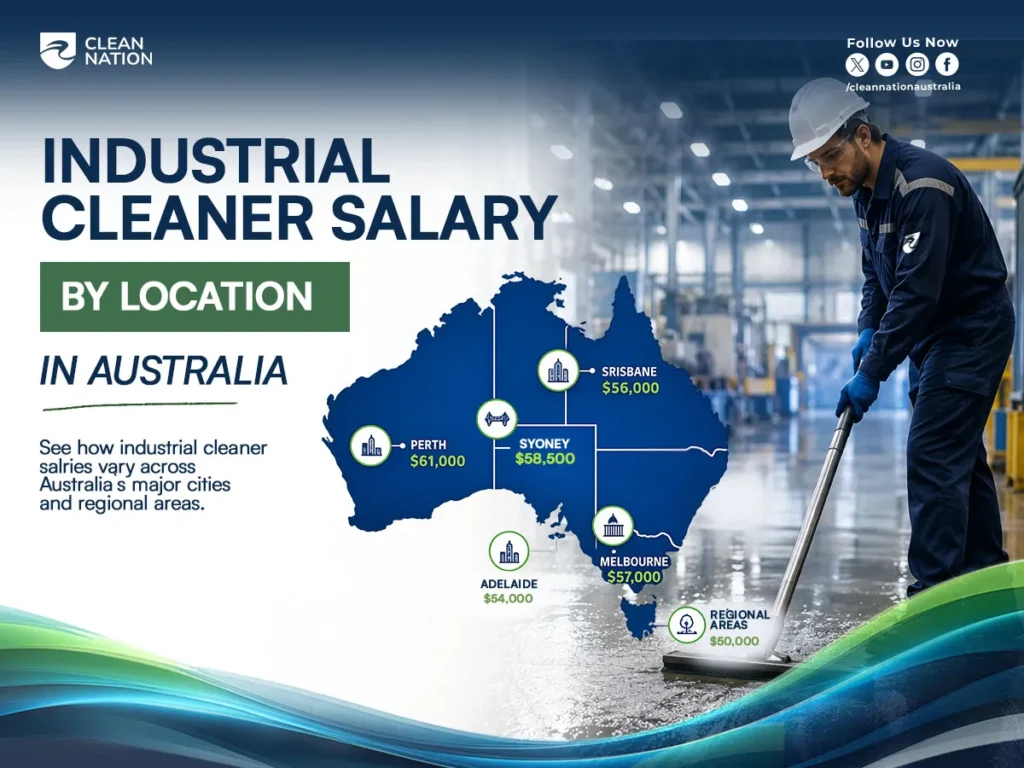
Where you work changes what you earn. Cities with a higher cost of living, like Sydney, tend to pay more than regional areas.
| City | Average Salary Range |
| Sydney | Highest in the country |
| Melbourne | Slightly below Sydney |
| Brisbane | Mid-range |
| Perth | Strong due to mining demand |
| Adelaide | Lower average, lower cost of living |
New South Wales generally offers the highest pay because of demand and living costs. If you’re based in the city, industrial cleaning services in Sydney often pay above the national average due to demand and cost of living. More broadly, industrial cleaning services in New South Wales tend to offer steady work across factories, warehouses, and manufacturing hubs. Perth often sees a boost too, thanks to mining and industrial projects nearby.
Key Factors That Affect Industrial Cleaner Salaries
Several things shape what an industrial cleaner actually earns. Employers use salary benchmarking to stay competitive, and workers can use the same data to negotiate fair pay.
Key factors include:
- Shift allowance for night, weekend, or early morning work
- Certifications and training, like forklift licences or chemical handling courses
- Employer size, since larger companies often pay more
- Specialised cleaning skills, such as working with hazardous materials or heavy machinery
- Cost of living in your region
Understanding these factors helps you know your worth before accepting a job offer.
Highest Paying Industrial Cleaning Roles in Australia
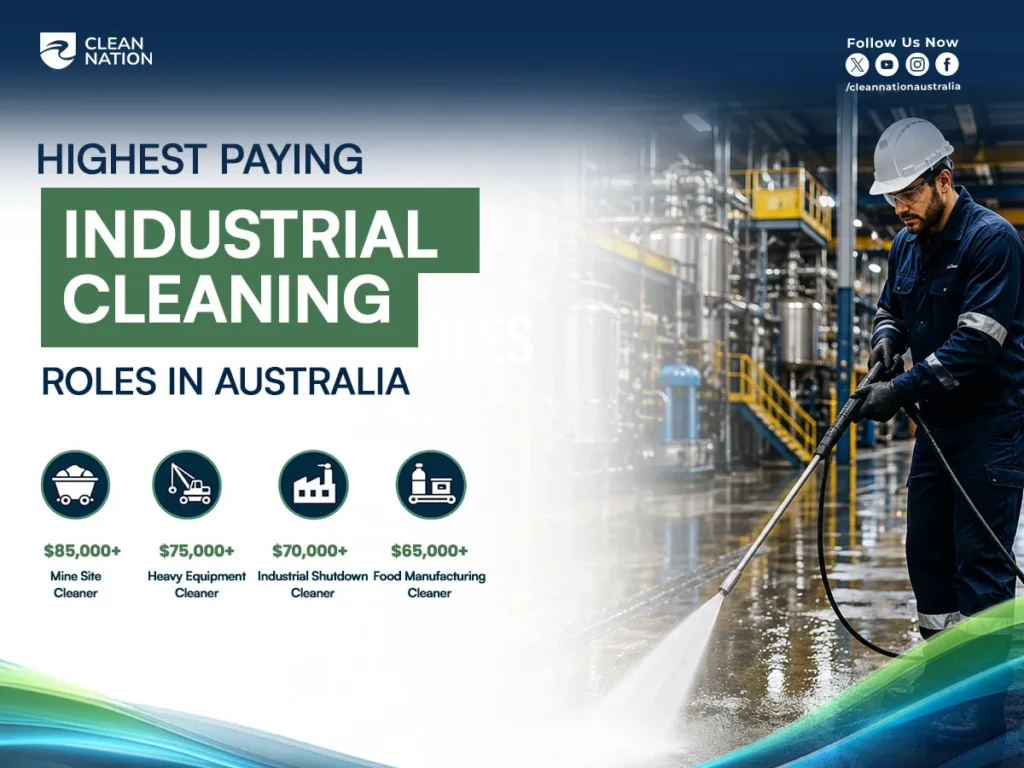
Not all industrial cleaning jobs pay the same. Specialist roles, especially in remote or high-risk industries, tend to offer the best pay.
- Mine site cleaning – Mining sites often pay a premium due to remote locations and strict safety demands.
- Heavy equipment cleaning – Requires technical skill and often pays above average.
- Industrial shutdown cleaning – Cleaning plants during shutdown periods, usually short-term but high-paying.
- Food manufacturing cleaning – Requires hygiene certifications and pays well due to compliance standards.
- Power station cleaning – Coal and energy sites come with their own hazards and pay scale. If you want to see what’s involved, our guide on How to Clean Coal Power Stations? breaks down the process.
- Industrial tank cleaning – Confined space work with strict safety requirements, which typically means higher pay for trained technicians. See our guide on How to Clean an Industrial Tank? for what the job actually involves.
If you’re chasing higher pay, mining and heavy industrial cleaner roles are worth exploring.
Industrial Cleaner Salary vs Other Cleaning Jobs
Industrial cleaning generally pays more than other cleaning roles because of the physical demands and safety requirements involved.
| Role | Average Salary |
| Industrial Cleaner | $57,591 |
| Commercial Cleaner | Lower than industrial |
| Domestic Cleaner | Lowest average |
| Cleaning Supervisor | Higher than industrial |
| Mine Site Cleaner | Among the highest |
The gap comes down to risk and skill. Industrial and mine site cleaning involve heavier machinery, hazardous materials, and stricter safety training compared to commercial or domestic cleaning.
What Does an Industrial Cleaner Do?
Industrial cleaners handle heavy-duty cleaning tasks that go far beyond wiping down surfaces. Their daily work usually includes:
- Factory cleaning, covering floors, walls, and equipment
- Machinery cleaning, keeping production equipment running smoothly
- Conveyor cleaning, clearing debris and buildup
- Industrial waste disposal, following strict safety rules
- Production area cleaning, maintaining hygiene standards during operations
- Chemical handling, using approved products safely
- Workplace sanitation, reducing contamination risks
This explains why pay is higher than standard cleaning roles. The physical demands and safety responsibilities are real, and employers expect you to take them seriously. If you want to see what this work actually looks like day-to-day, this short clip on industrial cleaning gives a real look at the job.
Skills and Qualifications Needed to Become an Industrial Cleaner
You don’t need a university degree to become an industrial cleaner, but certain skills and certifications help you earn more and stay safe.
Common requirements include:
- Cleaning experience, even from other cleaning jobs
- WHS knowledge (Work Health and Safety basics)
- PPE training, knowing how to use protective equipment correctly
- Chemical handling skills, especially for hazardous substances
- Machine operation, for specialised equipment
- Safety certifications, like a White Card or forklift licence
Having these qualifications can push your pay above the entry-level range. Most employers offer this training when you’re hired, so lacking certification now shouldn’t stop you from applying.
Career Growth Path for Industrial Cleaners
Industrial cleaning isn’t a dead-end job. There’s a clear path for career advancement if you’re willing to put in the time.
Typical progression looks like this:
- Entry-level cleaner – Learning the basics and building experience
- Cleaning supervisor – Managing small teams and daily operations
- Site manager – Overseeing larger contracts and multiple teams
- Cleaning business owner – Running your own cleaning company
Many workers worry about long-term prospects in this field. The reality is demand stays steady because factories, warehouses, and mine sites always need cleaning, regardless of economic ups and downs.
Why Businesses Hire Professional Industrial Cleaners
Businesses don’t hire industrial cleaners just to keep things tidy. It’s about protecting people, equipment, and compliance.
Key reasons include:
- Workplace safety – Reducing slip, trip, and contamination hazards
- Reduced equipment downtime – Clean machinery breaks down less often
- Improved hygiene standards – Critical for food and medical facilities
- Compliance requirements – Meeting legal and industry regulations
- Longer equipment lifespan – Regular cleaning protects expensive machinery
Cutting corners on cleaning often costs businesses more in the long run through breakdowns and safety incidents.
How Clean Nation Provides Industrial Cleaning Services
Clean Nation offers professional industrial cleaning services in Australia built around your site’s specific needs. Whether it’s a factory floor, heavy equipment, or a remote mine site, our teams are trained and ready.
What sets us apart:
- Custom cleaning plans tailored to your industry and site
- Award-compliant workforce, so you never worry about pay disputes
- Experienced cleaning teams, trained in safety and specialised equipment
- Workplace hygiene solutions that meet compliance standards
If you’re a business looking for dependable industrial cleaning, or a worker looking for fair pay and real career growth, Clean Nation is built to deliver both.
Frequently Asked Questions
How much superannuation do industrial cleaners get in Australia?
Industrial cleaners receive the standard Superannuation Guarantee rate, currently 11.5% of their ordinary earnings, paid by their employer on top of wages.
Do industrial cleaners work night shifts?
Yes, many industrial cleaning jobs involve night or early morning shifts, especially in factories and manufacturing plants that need to stay operational during the day.
Is there a minimum age to work as an industrial cleaner in Australia?
Yes, most employers require workers to be at least 18 years old, mainly due to the physical demands and safety risks involved in industrial sites.
Do industrial cleaners get paid weekly or fortnightly?
Most industrial cleaning employers pay weekly or fortnightly, depending on company policy, with payslips showing base pay, loadings, and any penalty rates.
Can you become an industrial cleaner without any qualifications?
Yes, you can start with no formal qualifications. Most employers provide on-the-job training covering safety procedures, equipment use, and chemical handling basics.
Conclusion
Industrial cleaning offers solid pay, real career growth, and steady demand across Australia. From entry-level roles starting around $52,245 to senior positions reaching $63,744, there’s a clear path to build a stable career in this industry.
If you’re looking to join a workforce that values fair pay and genuine growth, or you need a trusted cleaning partner for your business, contact Clean Nation, and we’re ready to help you take the next step.